|
 |
 |
 |
|
|
Home | More Articles | Join as a Member! | Post Your Job - Free! | All Translation Agencies | |
|
|||||||
|
|
|
|
Laughs and Nightmares in Oilfield Translation
How to avoid landing in the “doghouse” when dealing with oil and gas terminology
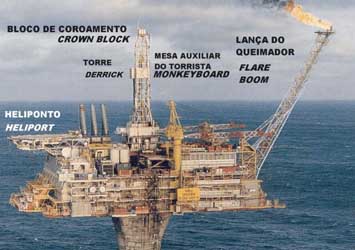
Every language is dynamic and susceptible to transformations. The 1998 edition of the Vocabulário Ortográfico da Língua Portuguesa (Orthographic Vocabulary of the Portuguese Language) published by the Brazilian Academy of Letters (ABL), has no less than five thousand neologisms. Borrowed terms such as the IT jargons “deletar,” “printar” and “escanear” have been included. The English language is no different. Americans are especially known for possessing an incredibly fertile imagination when it comes to creating anachronisms and neologisms. The oil industry undoubtedly congregates the greatest complexity of technologies from different sectors, such as engineering, chemistry, geology, business administration, accounting, law, naval, etc. This gave rise to a Babel Tower indeed. To make matters worse, companies operating in this area have developed their own terminology derived from English terms, making the professional lives of translators a real torment. Certain words and expressions used in the oil industry serve as amusing examples:  Humor And Its Challenges There are numerous terms on board a drilling rig that allude to animals. Take doghouse, for example. We all know pets are not allowed on offshore facilities, let alone dogs. However, we are not talking about an actual dog’s house, as a layman would be inclined to translate. Instead, the term translates as sala do sondador (driller’s shed cabin). The derrickman’s platform (mesa do torrista) is called a monkey board and yet has nothing to do with primates. It is located on the derrick and mounted over the aperture in the hull of a drillship or semi-submersible craft known as the moonpool. A mousehole (buraco do ratinho) may scare a less qualified person, but it does not represent a health hazard. It consists of an opening in the drill floor where a joint of pipe is temporarily stored until added to the drillstring. Muleshoe is not translated as ferradura (horseshoe), but as luva de orientação (orienting sleeve). The term pig, on the other hand, may be kept in its original English form when translating to Portuguese, although depending on the application, raspa-tubos (pipe cleaner), separador de batelada (batch separator) and calibrador interno (drift mandrel) are also acceptable. Spider can be translated as aranha, adaptador de cunha or elevador tipo cunha. And finally, rabbit (pipe cleaner), ram (part of the blowout preventer), ringworm (such as in “ringworm corrosion”), and wildcat — are translated as bujão de limpeza, gaveta, circular and poço pioneiro, respectively. The challenges do not end here. Take the nouns that are normally considered proper names, such as geronimo. Geronimo was a famous Apache warrior whose alleged supernatural powers made him invulnerable to bullets. However, in the oil business, the term refers to a “safety slide” used to evacuate the derrickman in case of emergency and is translated as rampa de segurança. Brazilians often work with Catarina. Yet, in this case the situation is reversed, as the term in English is a harmless “traveling block.” Go devil may sound like a horror movie, but in fact refers only to a pig (raspa-tubos or bujão detonador). Although the graveyard tour also sounds like something out of a Stephen King novel, it is nothing more than the midnight shift (turno da meia-noite).
By the way, tour is pronounced like tower, further enhancing the gloomy tone. On this same note, I must also mention the terms stabbing board — a joint alignment platform (translated as mesa de alinhamento de revestimento or mesa auxiliar do torrista) — and widow maker (passadiço de acesso), the ‘catwalk’ between the rig and a tender. Roughneck does not indicate a dermatological problem, but a floorman (plataformista) or driller’s assistant (braçal). His duties include using an idiot stick or “shovel” (pá), preparing a jar — a telescopic piece of equipment that emits upward or downward blows to free a stuck tool and translated as percursor — and a sucker rod — used to connect pumping units, translated as haste de bombeio Oil companies and drilling contractors attempt to make life on board a platform as pleasant as possible. In addition to good food, offshore facilities usually feature gyms, movies and other amenities. There is even a stripper… But hold on! This term, which is translated as poço com pouca lucratividade, does not refer to a cabaret dancer, but to a marginally profitable well. Similarly, the terms jug, nipple chaser and thief are translated as geofone (geophone), procurador de equipamentos (equipment procurer) and coletor de amostras (sampler). These are just a few examples. Many more certainly exist and will surface as time passes and the industry evolves. Conclusion Márcia Buckley has been a freelance translator since 1978, having lived in the United States during two different periods. In addition to holding a license in English teaching, she is a member of the American Translators Association (ATA) and is accredited by the Brazilian Translators Association (ABRATES) in both English and Portuguese. Buckley specializes in oil and gas in general and has published two technical terminology dictionaries in this area. Her favorite hobbies are golf, sailing and volunteer work. This
article was originally published in Сcaps Newsletter
(http://www.ccaps.net)
E-mail this article to your colleague! Need more translation jobs? Click here! Translation agencies are welcome to register here - Free! Freelance translators are welcome to register here - Free! |
|
|
|
|
|
|
| |||
Legal Disclaimer Site Map |
 The
entries in this article were taken from my own dictionary
released in 2001. The publication was carefully compiled
over nearly 20 years of work in the translation business.
Although the dictionary contains a good number of
terms, it does not constitute a complete list of words
and unique expressions that an observer is likely
to hear during a visit to an oilfield. Rather, it
is intended to serve as a basic reference for understanding
the most common terms and is designed merely to assist
those who are not familiar with the terminology used
in the area of oil and gas.
The
entries in this article were taken from my own dictionary
released in 2001. The publication was carefully compiled
over nearly 20 years of work in the translation business.
Although the dictionary contains a good number of
terms, it does not constitute a complete list of words
and unique expressions that an observer is likely
to hear during a visit to an oilfield. Rather, it
is intended to serve as a basic reference for understanding
the most common terms and is designed merely to assist
those who are not familiar with the terminology used
in the area of oil and gas.