|
 |
 |
 |
|
|
Home | More Articles | Join as a Member! | Post Your Job - Free! | All Translation Agencies | |
|
|||||||
|
|
|
|
The Basque Language
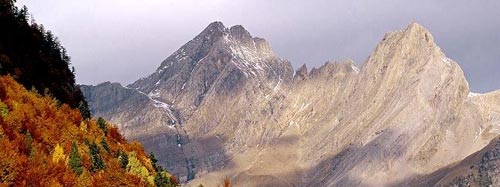
In the mountains of the Pyrenees, right along the border between France and Spain, you’ll find a language like no other. The Basque language, Euskera, is spoken by about a quarter of the people who live in the ancestral Basque region. Often derided by French and Spanish speakers as “incomprehensible,” the Basque language lives on nonetheless, and it is spoken fluently by just over 1 million people.
What makes the Basque language so unique? Most of Europe speaks Indo-European languages. Indo-European is a huge language family which includes most of the languages spoken in Europe, as well as Sanskrit and related languages in India. Basque’s uniqueness stems from the fact that it is not an Indo-European language. In fact, it is believed to be far older, one of the remnants of the language family spoken in Europe before Indo-European people began migrating across the continent. Basque is considered to be a language isolate, and scholars have been unable to connect it to any other known language. Basque has a very different vocabulary and a completely different sentence structure from nearby languages. Nobody knows exactly when the ancestors of the modern-day Basque people arrived in the Pyrenees, but evidence of continuity in local archaeological sites has led some scholars to believe that they have been there for about 35,000 years, since before the dawn of agriculture. The first historical mention we have of the tribes inhabiting the Basque region is from the Greek geographer Strabo, who refers to the Vascones as inhabiting the region around 1 AD. However, although it seems like a likely hypothesis, we have no way of knowing that the “Vascones” and the Basques are the same people. Roman Times During the time of the Roman Emperor Augustus, the Basque region was part of the Roman Empire. However, since the area was remote and not particularly rich in natural resources, the Romans didn’t pay much attention to it. So, Basques retained a significant amount of political autonomy. There were, however, Roman garrisons nearby, and young Basque men often went to seek their fortunes in the army of the Empire. After Rome fell, the Basques fought against the Visigoths who claimed their territory. In the centuries that followed, they resisted attempts at external control from both the Visigoths and the Franks. The Franks eventually gained some control over the region, but it was punctuated by frequent rebellions. In fact, this forms a recurring pattern throughout Basque history: control by outsiders, punctuated by rebellion. In 824 AD, Basque forces defeated both Franks and Muslims, creating the independent kingdom of Pamplona. However, over the next two centuries, Castilian armies chipped away at the kingdom’s boundaries, and internal fighting between Basque ruling families took a toll. By the end of the Middle Ages, all of the Basques’ territory had been divided between France and Spain. However, the Basques in both France and Spain still retained many rights of self-government, including their own laws, courts and taxation. Basque soldiers contributed manpower to the Reconquista, helping to free Spanish territory from its Muslim rulers. The Basques were also successful sailors, manning fishing boats, whaling expeditions, and three especially famous ships: the Nina, the Pinta and the Santa Maria. Actually, Basque sailors were the crew members of choice for many Spanish explorers. Magellan’s crew was also Basque, as were many of the first settlers in the New World. However, with the overthrow of the French and Spanish monarchies, Basque self-government was severely curtailed. This was especially true in Spain after Francisco Franco’s forces defeated the Spanish republicans. Franco wanted to wipe out the languages and cultures of Spanish minorities such as the Basques and the Catalans. Laws were passed to limit the ability of Basques to use their language in the public sphere. Due to these laws, the Basque nationalist movement gained strength during the years that the dictatorship was in power. After Franco was overthrown, Basques in Spain were given back limited self-rule powers, but the nationalist movement persists. Most nationalist protest is peaceful, but one group, the ETA, often uses violence. The ETA is considered a terrorist organization by France, Spain, many mainstream Basques and the European Union. Since the return of self-rule to the Basque Autonomous Country in Spain, Basque language has co-official status with Spanish in that region. Although there are 6 major regional dialects, a standardized dialect known as Batua has also been developed to facilitate communication between Basques from different regions. Today, there are 1,063,700 Basque speakers, with 665,700 of them speaking Basque as their first language! About the Author K International is a translation services company offering language translations and other linguistic services in 150+ languages. More can be found out about them on their website http://www.k-international.com Original article is here, http://www.k-international.com/basque_translation
E-mail this article to your colleague! Need more translation jobs? Click here! Translation agencies are welcome to register here - Free! Freelance translators are welcome to register here - Free! |
|
|
|
|
|
|
| |||
Legal Disclaimer Site Map |