|
 |
 |
 |
|
|
Home | More Articles | Join as a Member! | Post Your Job - Free! | All Translation Agencies | |
|
|||||||
|
|
|
|
Utilize translation software to reach a wider audience
To Buy or Not to Buy: User Generated
Content Drives
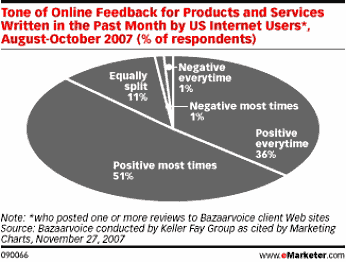
Initially, consumer reviews and comments were not seen as a valid source of information, but rather, as negative, biased opinions of disgruntled consumers. However, a survey conducted by eMarketer.com in November 2007 reported that consumers really do have good intentions, and 9 out of 10 respondents wanted to help others to make better buying decisions through their submission of user generated content.
The illustration here demonstrates the trend of on-line feedback for products and services. As seen in this graph, a total of 87% of the users posted positive comments either all the time or most of the time; in contrast, only 2% posted negative comments either all the time or most of the time. User generated content (UGC): DefinedUser generated content, also referred to as “consumer generated media,” refers to the various digital information produced and created by the end user. As new technologies have become more accessible and affordable to the general public, consumers have embraced the idea that they can help others by providing them with information. According to Wikipedia, the following is a list of prominent websites based on user generated content:
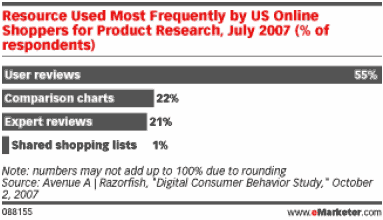
Sites like these invite and encourage consumers to publish independent content about a product or servicethrough interactive opportunities. Readers no longer have to rely on the expertise of or content developed by the manufacturer or industry experts, but instead value reviews and information produced by the fellow consumers. Other sites, like CNET.com, not only provide professional product reviews, but also give users the opportunity to post their own comments and reviews, which can often disagree with the professional review, leading to more credibility being placed on the UGC. User generated content can vary depending on the experience; but overall, a prospecting consumer can gauge the general consensus among the content submitted by the public. The chart below demonstrates user reviews as a resource for product research; more than half of consumers used user reviews most frequently for product research.With this much attention placed on UGC, word-of-mouth marketing can become even more infuential.
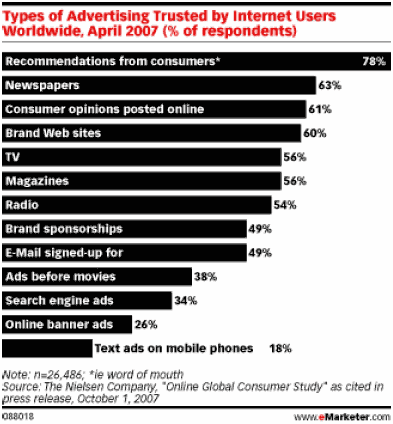
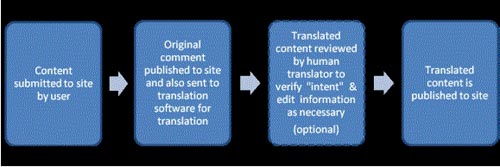
With easy-to-access and easy-to-use applications for digital video, blogging, podcasting, news, research, mobile phones, photography and wikis, word-of-mouth marketing has evolved into something much bigger. The single consumer that would normally tell 7-10 friends about a product or service can now post their experience online and reach millions of people! But this transition is not in any one part of the world – it is a global phenomenon. In another survey conducted in April 2007 by Nielson, 78% of internet users worldwide indicated that they trust recommendations from consumers, making word of mouth the type of advertising trusted by the most people. (See next chart). Cashing in With User Generated ContentIn the world of new media, “eyeballs” are the most important thing – eyeballs turn into ad revenue, new customers, and new markets. But how do you get more people to your website, blog, podcast, or video? By making it useful for more people! With user generated content driving markets and buying decisions, one of the most obvious ways to make that content useful for more people is to provide the information in multiple languages, no matter what language it originated in. However, with hundreds of thousands of users contributing content, translating comments and new content is not feasible using only human translators if a company wants to post it shortly after it is received – there is simply too much content and too many languages to translate into. Automated translation software continues to gain credibility, particularly in areas where there are large (or endless!) amounts of content - user generated content certainly fts into this category. While automated/machine translation software is the fastest way to get UGC into new languages, there are important factors to consider; namely, content is not typically going to be of publishing quality, and often includes typos, grammatical errors, informal language, slang, or jargon specifc to a culture. For translation software that relies on linguistic rules, this type of data poses signif-cant challenges. Statistically based translation software, such as Language Weaver’s, can be customized to translate informal language at a much higher quality than rule-based software. This is most effective for companies that have already been translating user generated content and have built up a lot of translated data; Language Weaver can use these human generated translations to create a customized translation system. The statistical training process helps ensure that new data in the same domain and style is translated at a much higher quality than the out-of-the-box solution. The following fowchart provides a high level overview of the process for translating user generated content on a site to increase the value to foreign language speakers.
Depending on the needs of the end users, a human translator review step can be included for all, or selected, content. This can be particularly helpful to verify that the “intent” of the comment stays the same. For example, if a user wrote that a hotel was “awfully clean,” the translator would make sure that it was translated as a positive comment, rather than a negative one, despite the use of the word “awfully.”
As comments are corrected, they can be used to periodically retrain the statistical translation software so that new terms, products, locations, etc. are included in the information the system uses. This continuous feedback loop will ensure that the quality of the translation software continues to improve, less time is needed for translation and editing each comment, more information can be translated, and more users (i.e., eyeballs) come to the site. As more consumers start relying on user generated content to make decisions, more consumers will also start to “pay it forward” by contributing their opinions and other information on sites. It is unlikely that the creation of digital content will slow down in the near future; therefore, companies that target a global audience should consider options for effectively and effciently translating the volumes of UGC being created today. The Opportunity for the Translation Industry Companies worldwide are realizing that UGC needs to be taken seriously because it has a direct impact on buying decisions; therefore, they have begun to rethink their business models and marketing to communicate in new ways. With the shift from static to dynamic content, it is only a matter of time before documentation and manuals become less important than they are today. However, the translation industry has a unique opportunity to adapt and cash in with new business opportunities. Translation companies interested in increasing their revenue stream should look for ways to use automated translation software to provide a fast turnaround on user generated content in the industries they already work with. For example, a company providing translation services for the automotive industry should also look for ways to translate UGC on sites that provide users reviews of cars; the same can be done for the software, travel and consumer electronic industries. Many existing clients may have their own site for UGC – proposing to translate that content gives translation providers an opportunity to expand the relationship and revenue in an area of expertise. Language Weaver does not foresee the increased automation putting translators out of work; however, translation providers do need to adapt to the new, dynamic ways of communicating to keep up with the demand and ensure the growth of the industry. ClientSide
News Magazine - www.clientsidenews.com
E-mail this article to your colleague! Need more translation jobs? Click here! Translation agencies are welcome to register here - Free! Freelance translators are welcome to register here - Free! |
|
|
|
|
|
|
| |||
Legal Disclaimer Site Map |