 |
 |
 |
 |
|
|
Home | More Articles | Join as a Member! | Post Your Job - Free! | All Translation Agencies | |
|
|||||||
|
|
|
|
Translation Insights from the Inside - Interview with Dr. Mark Ritter, Chief Editor, McElroy Translation
He taught at a university in Minnesota and later returned to Austin, where he worked as a part-time editor, then translator for McElroy Translation, while he was teaching at Austin Community College. In 1999, Mark accepted the position of Chief Editor at McElroy. He has also served as a member of the certification committee for German to English of the American Translators Association (ATA). With a teaching background, expertise in technology and a wry sense of humor, Mark is a popular speaker and very readable author. Mark is interesting and his work is interesting so enjoy my interview with him! – Lisa Siciliani, Marketing Manager, McElroy Translation I know I won’t be the only one who wonders about this. What prompted you, a mathematics degree major, to undertake a doctorate program in German? I always liked languages, as well as science and math. I actually got better grades in verbal subjects, and with a lot less work. Maybe I respected math and science more because they were more challenging to me. I decided to take German at Cornell because that's my ethnic heritage on my father's side. I kept taking at least one German language and literature course every semester. It seemed more personal than math and science. And because I was very opposed to the Vietnam war, I admired the antiwar themes in postwar German literature. So I got more and more tuned in to my verbal side and less and less to the mathematical side. And when I took a graduate course in mathematical logic in my junior year I realized that I just couldn’t cut it. You can kid yourself in some other fields, but not in math. So then I jumped with both feet into studying German and decided to go to grad school at UT Austin. It was the early seventies. Who cared if it was practical (except my parents)? Some of your first translation work was the translation of books. Describe that work, and tell us how the types of translation work performed by McElroy differs from that of non-fiction work for publishing houses. I did a few technical translations towards the end of my academic career, but it didn’t occur to me that you could actually make a living that way. A faculty friend of mine at UT put me in touch with Sage Books in the UK, who needed a book on the sociology of the environmental movement translated. The author liked my work, so I did three more books of his and one for another author. The biggest difference between that and technical translation is the time scale. It would take me several months to get a rough draft of 100,000 words done. Then you would get an advance of part of the fee. The subject-matter edit would come back several months latter, and you'd have to deal with the edits, and there were a lot. A few months after that, you’d do the same with the final copy edit. Only then did you get the rest of the fee. Back then I measured deadlines on the scale of weeks. At McElroy it’s days. Those books are now all out of print, but they’re still being photocopied and used as textbooks in some European countries. I know because I still get a few hundred dollars in royalties every year. That’s another difference from translating for McElroy. Having worked as a translator for years, what are some of the most commonly asked questions (with your answers) and misperceptions about work as a translator? It’s hard for translation insiders to understand, but a lot of laypeople don’t really make a distinction between translation and interpreting. For instance, we hear about the problems faced by Iraqi translators for the US Army, but most of them are really interpreters. Interpreters work in real time, and a lot of people subconsciously assume translators do too. Another misconception is that there’s a bright line between a correct and an incorrect translation. Finally, a lot of non-linguists think that terminology is the most important aspect of the translation process. Actually, it’s often the easiest part. You can get technical terminology from a dictionary or the internet, but unless you get all the other parts right, you may confuse or even mislead the reader. The real challenge, at least with German, is unsnarling the syntax and turning it into readable English without losing any meaning. I recently translated a sentence that was 450 words long! Describe the role of a Chief Editor in a language services company and what do you find are the most interesting aspects of your work? What are the most challenging? My job is basically to supervise the QA process for the translations we supply to our clients. I’m fortunate to have an extremely well-educated and dedicated staff, most of whom have been with us for a long time. They can do 99% of their work without me. That’s fortunate, because I don’t think I’m a natural born manager. But even the best ship needs to have someone at the helm. The other huge part of my job is to coordinate with the rest of our organization to ensure that we not only produce the best documents we can, but also that we get them to our clients when they need them. Finally, I enjoy helping our sales and customer service staff handle questions from clients. I don’t enjoy having to respond to client complaints, but fortunately that doesn’t happen often. What did you enjoy the most in teaching? Does that experience help you as a Chief Editor? How does it prepare you in your role as a representative for McElroy? We used to like to say that the three biggest advantages of teaching were June, July and August. The traveling I was able to do definitely increased my language fluency. And I learned a lot about German from teaching. I really didn’t understand quite a few aspects of German grammar and pronunciation until I had to teach them. Not wanting to embarrass yourself in public is a great motivator. Having taught helps me train people and explain policies and strategies to my staff. I taught English composition as well as German for two years. Correcting awkward English is ideal preparation for editing translations from a language you don’t speak. Tell us about your work with the ATA, what its value is, and why you wanted to be involved in their exam grading program. In 1998 I took what was then called the accreditation exam for the American Translators Association. I was a little surprised I passed, and very surprised when the committee chairman asked me to join. I’ve been a committee member ever since. We spend a lot of time trying to come up with new test passages every year that are challenging but fair. It takes even more effort to work out grading standards for each passage, sentence by sentence and even word by word, that will ensure consistent scoring. One of the things I like about being a grader is that it gives me a chance to deal with stylistic aspects and nuances of translations that we don’t have the time or the need to consider in our everyday work. On the other hand, as the only technical translator on the committee, I also try to inject as much realism as I can into the assessment process. Your parallel interest in technology shapes your perspective of translation and localization. What trends do you see that will impact users of translation in the next few years? I wrote my first translations in longhand and then typed them. By the time I started doing large-scale translations, I was using a computer. Then, when I was a free-lancer for a short while in the late 90s, I started working with something called translation memory. That system was clunkier than today’s TM, but it wasn’t really different conceptually, just as the machine translation we’re all familiar with from Google isn’t conceptually very different from the same kinds of systems 20 years ago. A new generation of translation tools just now reaching the marketplace claims to be taking fundamentally new approaches. At the same time, the systems used for creating content to be translated are moving in directions that could make translation tools much more effective. I’m planning to write another article for E-Buzz on this subject. No matter how well all this technology works, it will not replace translators and translation companies, just as spreadsheets did not put accountants and accounting firms out of business. They weren’t so kind to bookkeepers though. If we want to be accountants and not bookkeepers, we will have to keep providing higher and higher value to our clients.
E-mail this article to your colleague! Need more translation jobs? Click here! Translation agencies are welcome to register here - Free! Freelance translators are welcome to register here - Free! |
|
|
|
|
|
|
| |||
Legal Disclaimer Site Map |
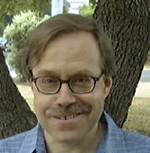 A native of Minnesota, Mark Ritter discovered
Austin in 1971, as many young people have, through attending
the University of Texas (UT). He was a mathematics major
at Cornell but studied German as an elective and eventually
a second major. After his undergraduate degree, he earned
a doctorate at UT, not in mathematics but in German!
A native of Minnesota, Mark Ritter discovered
Austin in 1971, as many young people have, through attending
the University of Texas (UT). He was a mathematics major
at Cornell but studied German as an elective and eventually
a second major. After his undergraduate degree, he earned
a doctorate at UT, not in mathematics but in German!

