|
 |
 |
 |
|
|
Home | More Articles | Join as a Member! | Post Your Job - Free! | All Translation Agencies | |
|
|||||||
|
|
|
|
Pharynx
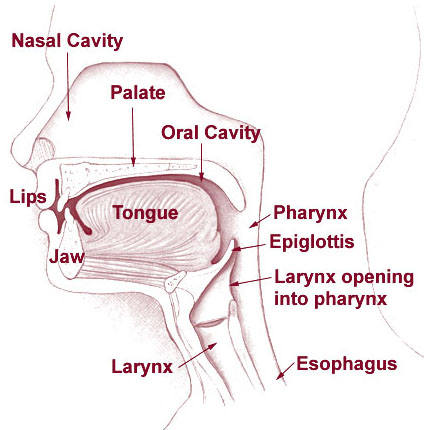
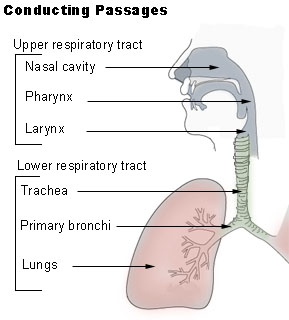
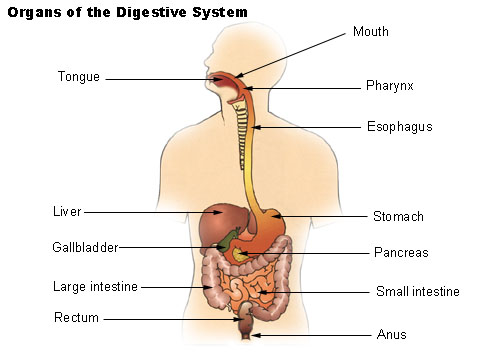
The pharynx (plural: pharynges) is the part of the neck and throat situated immediately posterior to (behind) the mouth and nasal cavity, and cranial, or superior, to the oesophagus, larynx, and trachea.
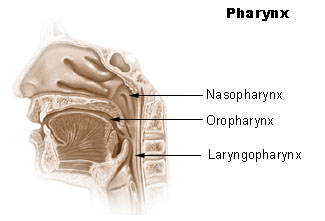
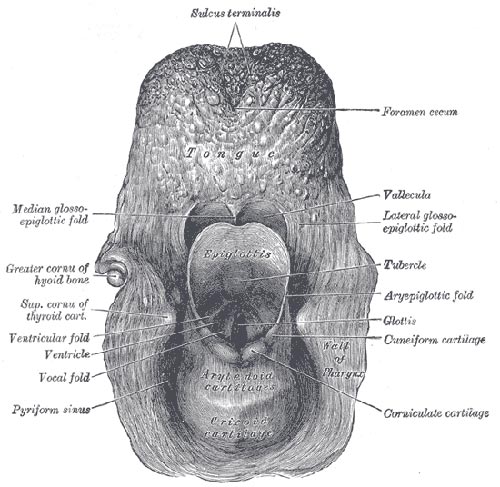
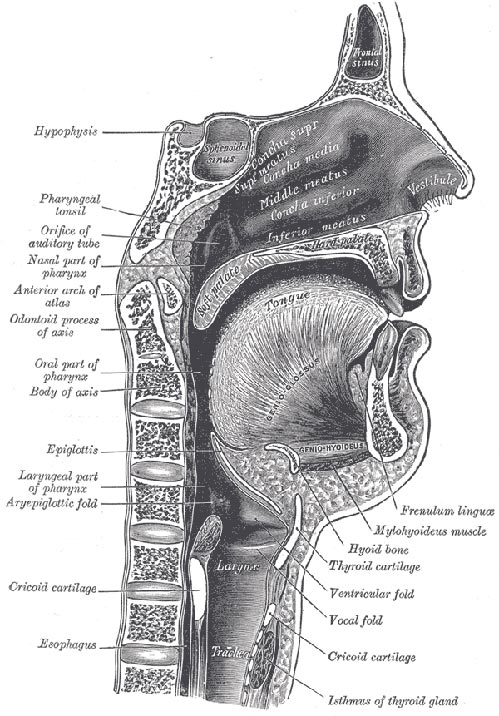
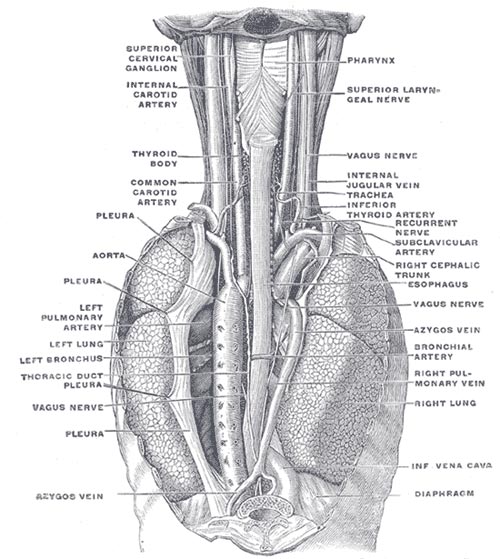
FunctionsIt is part of the digestive system and respiratory system of many organisms. Because both food and air pass through the pharynx, a flap of connective tissue called the epiglottis closes over the trachea when food is swallowed to prevent choking or aspiration. In humans the pharynx is important in vocalization. In persons with hayfever, oral allergy syndrome and related allergies, the pharynx is often a reaction site to allergens, with common symptoms including burning and itching. PartsThe human pharynx is conventionally divided into three sections: OropharynxThe oropharynx lies behind the oral cavity. The anterior wall consists of the base of the tongue and the vallecula; the lateral wall is made up of the tonsil, tonsillar fossa, and tonsillar (faucial) pillars; the superior wall consists of the inferior surface of the soft palate and the uvula. NasopharynxThe nasopharynx lies behind the nasal cavity. Postero-superiorly this extends from the level of the junction of the hard and soft palates to the base of skull, laterally to include the fossa of Rosenmuller. The inferior wall consists of the superior surface of the soft palate. LaryngopharynxThe laryngopharynx, also known as the hypopharynx, roughly corresponds to the levels between C4 to C6, it includes the pharyngo-esophageal junction (postcricoid area), the piriform sinus, and the posterior pharyngeal wall. Like the oropharynx above it the hypopharynx serves as a passageway for food and air and is lined with a stratified squamous epithelium. It lies inferior to the upright epiglottis and extends to the larynx, where the respiratory and digestive pathways diverge. At that point, the laryngopharynx is continuous with the esophagus posteriorly. The esophagus conducts food and fluids to the stomach; air enters the larynx anteriorly. During swallowing, food has the "right of way", and air passage temporarily stops. Additional images
References
See alsoExternal links
Published - November 2008 Information from Wikipedia
is available under the terms of the GNU Free Documentation
License
E-mail this article to your colleague! Need more translation jobs? Click here! Translation agencies are welcome to register here - Free! Freelance translators are welcome to register here - Free! |
|
|
|
|
|
|
| |||
Legal Disclaimer Site Map |