|
 |
 |
 |
|
|
Home | More Articles | Join as a Member! | Post Your Job - Free! | All Translation Agencies | |
|
|||||||
|
|
|
|
A Study of the Adequacy and Effectiveness of Persian Translations of Drug Leaflets
Abstract In this research, an attempt is made to analyze the adequacy and effectiveness of Persian translation of the drug leaflets. As this seems to be the first time that such a research is being done in Iran, there is no data available in this regard. By translating some of these drug leaflets and making a comparison between these translated brochures and leaflets that are made in Iran, we can achieve some information about the translatability of these texts, in general, and the translatability of their medical terms, in particular. A case study is to be carried out with a group of physicians and a group of patients in order to find out the effectiveness of drug leaflets and to examine to what extent they are comprehensible to the patients. There will be some questionnaires filled by a group of patients and physicians and interviews made with some patients to gain information about how this would be healthy for patients if these texts are translated ; also to what extent the patients can be informed of the side effects of the consumed drugs by reading the leaflets translations; and what their reaction will be after reading the translations: quit consuming the drug or consult the physician. Then the percentage of the pros and cons among physicians as well as patients can be statistically examined. The strategies which are used by the translators in translating medical texts especially drug leaflets are also studied in this research. Based on the findings of this research, it is vital to translate the drug leaflets for patients to gain some information about the drugs in order to consult their physician if any problem occurs. The medical texts of the drug leaflets are translatable except for the medical and chemical terms and expressions of these texts that can be replaced or accompanied by a description or an explanation in parentheses to become understandable for the drug consumers, i.e., the patients. Key words: Anemia, drug leaflets, instructions, medical terms, side–effect, translatability. 1. Introduction As in the today world all sciences and technologies are interrelated and each one is completing the other one, the relationship between translation and specialized and technical terms of medicine is going to be studied in this research. An attempt is made to examine the translatability of drug leaflets as well as its effectiveness for patients in the society while many drugs imported into Iran are left untranslated by companies. It will be worthy to know that to what extent the translation of these drug leaflets is necessary in order to inform the patients about the side - effect of drugs and also to figure out their reaction after getting some information about the drugs. 2. Research questions 1. To what extent is the translation of drug leaflets (into Persian) possible? 2. How effective and understandable are such translations for the target audience ( here the consumers of medicine, e.g. pertaining to anemia, especially educated patients above the level of secondary school in Iran at the age of 20-40) and what are the possible consequences of these translations for them? 3. What kind of strategies are used by the translators in translating medical texts especially drug leaflets? 3. Literature Review Foster (1958:1) considers translation as the act of transferring through which the content of a text is transferred from SL into TL. Catford points out that, “translation is the replacement of textual material in one language by equivalent textual material in another language”(1965:20). Wilss (1982: 3) points out: “Translation is a transfer which aims at the transformation of a written SL text into an optimally equivalent TL text, and which requires the syntactic, the semantic and the pragmatic understanding and analytical processing of the SL.” In addition, Nida( 1984 : 83 ) maintains: “translation consists in reproducing in the receptor language the closest natural equivalent of the source language message, first in terms of meaning and secondly in terms of style”. Likewise, translation, as Bell (1991: 8) asserts, involves the transfer of meaning from a text in one language into a text in another language. Benjamin (1923:16) holds that, “translatability is an essential quality certain works, which is not to say that it is essential that they be translated; it means rather that a specific significance inherent in the original manifests itself in its translatability.” Newmark (1988b: 17) believes that the “untranslatable” can be translated indirectly by transferring the source item and explaining it if no parallel item can be found in the TL. As a result, any message can be indirectly or directly translated from a SL to TL and, therefore, every thing is translatable (p.17). Catford (1965: 32) distinguishes two kinds of untranslatability, that is: linguistic untranslatability and cultural untranslatability. · Linguistic untranslatability: It occurs when there is no lexical or syntactical substitute in the TL for a SL item. · Cultural untranslatability: It is due to the absence in the TL culture of a relevant situational feature for the source text. “Equivalence in translation should not be approached as a search for sameness, since sameness cannot even exist between two TL versions of the same text, let alone between the SL and TL version” (Bassnett, 1994 : 29 ). Widdoson ( 1979 : 105 ) believes that, “equivalence is not just linguistic and semantic; it is also pragmatic”, and holds that, “we cannot of course, by definition establish pragmatic equivalence by considering isolated sentences but only by considering what utterances count as in context”. According to Vinay and Darbelnet (1995), Equivalence– oriented translation is a procedure which replicates the same situation in the same situation as the original, whilst using completely different wording. They regard equivalence as the ideal method when the translator has to deal with proverbs, idioms, clichés, and onomatopoeia of animal sounds (223). Regarding equivalence in the translation of medical texts, Borja Albi (2000: 2) believes that “when we try to explain the nature of translation, the question of whether or not a relation of equivalence exists between words, syntactic structures, or text types inevitably / always comes up ( the term “identity” has also been proposed ).” Taking equivalence into consideration, Borja Albi (2000: 3) believes that “the great majority of authors place themselves openly on the speech level. Along this line we find authors such as House (1981), the “skopos” theoreticians Nord (1988), Neubert (1985), Hurtado (1990), etc., all of whom suggest looking for dynamic, cultural and, what is even more interesting, ephemeral equivalences.” The lower quality of the translations of medical texts, she specifies, partly due to the large volume of work that has been generated and the lack of expert translators, which in turn has made it necessary for doctors, with very little concern for the language itself, to do the translating. In general, professionals in the field of medicine are neither bothered by nor worried about Anglicism, as many of them use an interlanguage which is actually easier and more comfortable for them (Borja Albi , 2000 : 12 ). An informative text aims to enlarge the knowledge of its addressee on a specific topic, by way of collecting data and information from different sources. The main types of informative texts are didactic textbooks, encyclopedic entries, scientific articles, newspaper articles, and tourist guides. According to Peter Newmark (1988: 40- 41):
Newmark (1993) asserts that ‘in an informative technical text, the translation's function is to give the information clearly, neatly and elegantly (this is its ‘literary’ quality), preferably in professional language (technical and ordinary).’ He also maintains that:
Technical translation is attributed to a particular field, subject, profession or business and should be put into a genre of its own. Technical documents can be anything from manuals to patents. Subjects include fields such as automotive, hydraulics, optics, engineering (civil, marine, mechanical, electrical), science and physics, to name just a few. Because of its specialized nature, technical translations need to be performed by translators specialized in the specific field (Net translators, 2008). According to Newmark (152):
He (159) also puts that these texts can be translated sentence by sentence, making grammatical shifts to form natural language. In a technical translation, a translator can be free in recasting grammar, i.e. cutting up sentences, transposing clauses, converting verbs to nouns, etc., as in any other types of informative text, provided the original is defective. A translator should product a better text than the writer of the original. According to Peter Newmark (1991: 49), “the more technical the text, the less important the knowledge of the foreign language; instead, the linguistic skill in the home language comes first.” Trimble (1985) refers to three lexical areas: 1) Technical vocabulary 2) Sub – technical vocabulary and 3) Noun compounds. Identifying these three types of vocabulary in specialist texts, Trimble defines technical terms as ‘context – independent words which occur with high frequency in the different disciplines.’ The result is that, Trimble maintains:
Larson ( 1984:182–183 ) suggests that in translating technical terminology, many word combinations may occur; then, the translator must always be on the alert so that he does not fall into the error of a false literal translation since the meaning of a combination as a whole cannot always be determined by the meaning of the individual constituent parts. Henry Fischbach (1961: 462) believes that ‘medical translations may be broadly divided into two main categories, depending on their purpose: information or promotion. A medical communication may inform as it promotes, and vice versa. But a text intended solely for internal information need not be as highly polished stylistically as one prepared for external promotion.’ He puts forward that ‘good translating is the rewriting in the foreign language of the ideas contained in the original. Indeed, we might even say that a good translator ought to be as good a writer as the one who wrote the original’ (462). When the medical communication being translated is intended for the private information of only a few individuals the translator requires no specialized knowledge other than the scientific subject matter of the translation, except in the case of patents where experience with some legal terminology is desirable ( Fischbach, 1961). The translation team, Fischbach states, ‘as distinct from the individual translator, is precisely the contribution a client comes to expect from a competent medical translation service. The backbone of such a team is, of course, the physician. Individuals are keenly conscious of consistency of both layout and terminology; and they are instructed in the peculiarities of foreign typographical practices. This means – in addition to medical men – stylists, editors, typists, and proof readers. Most of these individuals on such a translation team, in addition to being thoroughly bilingual, must also be familiar with current medical style and terminology in the target area’ (Fischbach, 1961 : 463 ) . He (464) also puts that 'there is quite a difference between the denotation of a word, i.e., its core actual meaning, and its connotation or marginal area, which suggests or implies overtones in addition to its actual meaning. Another difficulty is that even certain scientific words may look like perfectly safe cognates, yet results in a mistranslation if used as such.' For example, pepic ulcer is not ulcere peptique but ulcere gastro –duodenal in French and conversely anthrax in French is not anthrax in English, but carbuncle. In German, the word Halsweh is another such false friend that can be - shall we say - a pain in the neck; yet to the German physician it connotes sore throat (Fischbach, 1961: 464). Sometimes it is even very difficult to translate what appear to be the simplest English sentences:
Fischbach (472) believes that ‘the writer of medical texts should write clear, straightforward, descriptive English, particularly when a product is involved: what is it, what will it do, how will it do it, etc. He had better refrain from using strictly domestic words or phrases. Too often the problem of translators is having to interpret the English, and sometimes it is not easy to know what the copywriter intended. When new technical terminology has been coined, it is advisable to give the translator some guidance, perhaps through a parenthetical explanation. If the company has already established certain slogans, trademarks, stylistic or lay out practices, or new technical expressions in the particular foreign language, they should give the translator a break and let him in on it, for example by making available to him earlier published translations on the particular product, process, or treatment.’ As a result, medical texts should be translated into a clear, comprehensible, and straightforward target language. A word will not be always replaced with a word in medical translation. Sometimes, it is vital to substitute a term for a description or explanation in order to make it more understandable for the target audience. A footnote or parentheses are occasionally of great importance to elucidate a medical term in the target language. Translators of medical texts will have this freedom to change word order and sentence order to clarify the original language of a medical text. Therefore, a translated medical text, at times, can be much better and more fluent than the original language. 4. Methodology Each drug leaflet contains some information about the composition (ingredients) of the drug, instructions about how to use the drug, the possible side- effects of the drug, special warnings, and dosage of the drug. As many leaflets of the drugs imported into Iran are left untranslated, the researcher will translate some of these leaflets and analyze the translatability of the leaflets, in general, and translatability of medical and chemical terms existing in these leaflets, in particular. Then the Persian drug leaflets are studied. Then the effectiveness of the translation of drug leaflets for patients will be examined through questionnaires and interviews. In the following, the percentage of pros and cons among patients and physicians with the translation of drug leaflets will be presented based on the questionnaires filled by patients and physicians as well as the interviews done with the patients. 5. Materials Some of the drug leaflets( e.g. about 30-40 used in general diseases such as anemia) will be translated and then compared with translations of the leaflets provided for the drugs made in the country to receive some information about the translatability of the leaflets, in general, and translatability of medical and chemical terms in these leaflets, in particular. In addition, the effect of proper translation of the drug leaflets for the consumers will be studied, a point which has been neglected so far. There must be some questionnaires filled by a group of patients and physicians as well as interviews made with some patients to gain information about how it would be healthy for patients if these texts are translated and also to what extent the patients can be informed of the side effects of drugs by reading the leaflets translations; and what their reaction will be after reading the translations: quit consuming the drug or consult the physician. For this section of research, a case study will be done with a group of physicians (e.g. internists) on the one hand, and with a group of patients who are interested in reading the leaflets and in becoming acquainted with the side effects of drugs imported to Iran, on the other hand. Then, the percentage of the pros and cons among physicians as well as patients can be examined. 6. Procedure 'Ironorm capsules' is a drug which is used as a dietary supplement containing vitamins and iron. The researcher is going to present the English text of this leaflet as well as its translation done by the researcher. (1) Ironorm capsules
Translation: کپسول های آيرنورم لطفاً قبل از مصرف دارو، اين بروشور را به دقت بخوانيد. درصورت داشتن سوال یا ترديد با پزشک يا داروساز مشورت کنيد. Each capsules contains Ferrous sulphate Exsicc.BP 195 mg, Folic Acid Bp 1.7 mg, Thiamine Hydrochloride BP 1 mg, Riboflavine 2 mg, Ascorbic Acid Bp 15 mg, nicotinamide Bp 10 mg. Translation: هر کپسول شامل اين مواد است: فروس سولفات خشک (195 ميلی گرم)، فوليک اسيد (7/1 ميلی گرم)، تيامين هيدروکلريد (1ميلی گرم)، ريبوفلاوين ( 2 ميلی گرم)، اسيد آسکوربيک (15 ميلی گرم)، نيکوتيناميد (نياسيناميد – 10 ميلی گرم). In addition to the above ingredients, the capsules also contain Vegetable Oil, Fat mix, Lecithin, Coat, Gelatin, Glycerin, Sorbital Solution, Potassium Sorbate, Black Iron Oxide, Carmine Red, Yellow Iron Oxide, Titanium Dioxide. Translation: علاوه بر عناصر سازنده ای که در بالا ذکر شد، اين کپسول ها همچنين شامل روغن گياهی، مخلوط چربی، لسیتین، پوشش، ژلاتين، گلیسرين، محلول سوربيتال (قندالکلی شش کربنه که در تعداد زيادی از ميوه ها وجود دارد)، پتاسيم سوربات، اکسيد آهن سياه، کارمين قرمز رنگ (ماده قرمز رنگی که به عنوان يک رنگ فيزيولوژيک کاربرد دارد، اکسيد آهن زرد رنگ و دی اکسيد تيتانيوم است. Ironorm capsules are available in packs of 25 and 100. Translation: کپسول های آيرنورم در بسته های 25 تايي و 100 تايي موجود هستند. Ferros sulphate is a source of Iron in a form which can be absorbed by the body. Folic Acid, thiamine hydrochloride, Riboflavine and Nicotinanide are considered as part of the B vitanins. Folic acid taken before and during pregnancy provides some protection against neural tube defects (Spina bifida). Ascorbic acid is vitamin C. Translation: فروس سولفات منبع آهن به شکل قابل جذب برای بدن است. فوليک اسيد، تيامين هيدروکلريد، ريبوفلاوين و نيکوتيناميد جزو ويتامين های B هستند. فوليک اسيد که قبل و بعد از دوران بارداری مصرف می شود، جهت پيشگيری از نارسايي های لوله عصبی در جنين (اسپينابيفيديا: يک ناهنجاری تکاملی که مشخصه آن نقص در بسته شدن محفظه ی استخوانی نخاع است) استفاده می شود. اسيد آسکوربيک همان ويتامين C است. Ironorm Capsules are for the treatment of iron and vitamin deficiency states and as a dietary supplement during pregnancy. Translation: کپسول های آيرنورم برای درمان کمبود آهن و ويتامين و به عنوان يک مکمل غذايي در دوران بارداری استفاده می شود. Ironorm capsules are used for the following: - As a dietary supplement when trying to become pregnant. - As a dietary supplement during pregnancy. - As a treatment for Iron and Vitamin deficiency states. Translation: کپسول های آيرنورم برای موارد زير مصرف می شود: - به عنوان يک مکمل غذايي برای خانم هايي که قصد دارند باردار شوند. - به عنوان يک مکمل غذايي در دوران بارداری. - به عنوان درمان کمبود آهن و ويتامين. You should not use this medicine if you are sensitive to any of the ingredients. Ironorm Capsules and tetracyclines may interfere with absorption of each other. The absorption of the Iron component of Ironorm Capsules will be reduced when taking certain medicines such as penicillamine, antacids and cholestyramine; certain foods and drinks such as tea, eggs, or milk may also reduce iron absorption. Translation: چنانچه به هر يک از اجزای موجود در اين دارو حساسيت داريد، از مصرف دارو خود داری کنيد. کپسول های آيرنورم و تتراسايکلين ممکن است در جذب يکديگر اختلال ايجاد کنند. هنگامی که برخی داروها نظير پنی سيلامين، ضد اسيدها و کلستيرامين استفاده شود، جذب عنصر آهن کپسولهای آيرنورم کاهش می يابد، غذاها و نوشيدنی های خاصی نظير چای، تخم مرغ، و شير نيز ممکن است جذب آهن را کاهش دهد. You should inform your doctor or pharmacist before taking this medicine if any of the following apply to you: * you are taking chloramphenicol (which will delay elimination of iron). * you are pregnant or trying to become pregnant (unless you have been prescribed Ironorm Capsules for this reason). Translation: چنانچه هريک از موارد زير درمورد شما صدق می کند، بهتر است قبل از مصرف اين دارو، دکتر و يا دارو سازر خود را مطلع کنيد: درحال مصرف کلرامفنيکل هستيد (چون دفع آهن را به تأخير می اندازد). باردار هستيد و يا قصد باردار شدن داريد (مگر در شرايطی که کپسول آيرنورم به اين دليل تجويز شده باشد). Special warnings Do not exceed the stated dose. Keep all medicines out of reach of children. Translation: هشدارهای خاص بيشتر از مقدار تعيين شده مصرف نکنيد. تمام داروها را دور از دسترس کودکان نگه داريد. Dosage * As a dietary supplement before and during pregnancy: one capsule with a meal. * For the treatment of iron deficiency states: one capsule three times daily with meals. Or as directed by a physician. Translation: مقدار مصرف *به عنوان يک مکمل غذايی قبل از بارداری ودرحين بارداری: يک کپسول همراه با يک وعدة غذايی. * برای درمان کمبود آهن: روزانه سه کپسول با وعده های غذايی. و يا طبق دستور پزشک . Overdose If you have taken too may Ironorm Capsules, you should consult your doctor or hospital immediately, if possible you should take the packaging and this leaflet with you. Translation: مصرف بيش از حد دارو چنانچه از کپسول های آيرنورم بيش از اندازه مصرف کرديد، بهتر است بلافاصله با دکتر و يا بيمارستان مشورت نماييد و درصورت امکان بستة دارو و اين دستورالعمل را به همراه داشته باشيد. Side effects The medicine may cause some minor unwanted side effects. These can include: Anorexia, nausea, vomiting, gastrointestinal discomfort, constipation, diarrhea, dark stools and allergic reactions. Translation: عوارض جانبی اين دارو ممکن است سبب برخی عوارض جانبی ناخواسته و جزئی شود. اين عوارض عبارتند از : بی اشتهايی، تهوع، استفراغ، ناراحتی های گوارشی، يبوست، اسهال، تيره رنگ شدن مدفوع و واکنش های حساسيت. If these effects are severe or persist for more than a few days then discontinue use of the medicine and consult your doctor. Translation: چنانچه این عوارض شدید باشد و یا بیش از چند روز ادامه یابد، مصرف دارو را قطع کنید و با پزشک خود مشورت کنید. If you experience any unexpected side effects not mentioned above or the effects are more than minor, then you should consult your doctor. Translation: چنانچه عوارض جانبی پيش بينی نشده ای، غير از آنچه دربالا ذکر شد، مشاهده کرديد و يا عوارضی درشما ايجاد کرد که جزئی نيست، با پزشک خود مشورت نماييد. Do not use after the expiry date marked on the carton. Store between 4c and 25c. Translation: پس از تاريخ انقضای مشخص شده در روی جعبه ، از دارو استفاده نکنيد. بين 4 تا 25 درجة سانتيگراد نگهداری شود. A Product of: Translation: محصولی از : شرکت توليدات دارويی والس. خيابان کويين آن شماره 52، لندن W1M9LA، انگلستان. بروشور اصلاح شده: 3 فوریه ی 1999 ( (HO34-2 (2)'Fefol' is a kind of spansule capsules which is used for anemia. The researcher is going to present its English text as well as its translation done by the researcher. FORM- AND –PRESENTATION Clear, colorless capsules, transparent green –capped and filled with a mixture of red, pale yellow and white pellets. Each SPANSULE sustained –release capsule contains 150 mg dried ferros sulphate BP (47 mg elemental iron)and 500 micrograms folic acid BP. The iron is especially formulated for sustained release over a period of several hours. Translation: شکل و معرفی دارو کپسول های صاف و بی رنگ، با کلاهک سبز شفاف که با مخلوطی از گلوله های قرمز، زردکم رنگ و سفید پرشده است. هرکپسول پیوسته رهش اسپانسول شامل 150 میلی گرم فروس سولفات خشک شده (47 میلی گرم آهن اولیه ) و 500 میگروگرم فولیک اسید است. آهن موجود درآن به ویژه به منظور جذب آرام درطی چند ساعت ساخته شده است. USES FEFOL is a haematinic preparation for prophylaxis of iron and folic acid deficiency during pregnancy. Translation: ففول به عنوان یک فرآوردة خون ساز به منظور پیشگیری از کمبود آهن و فولیک اسید در دوران بارداری استفاده می شود. DOSAGE- AND-ADMINISTRATION Adults only: 1 FEFOL SPANSULE Capsule a day during pregnancy. Some pregnant patients may need a higher prophylactic dose of iron because of dietary or other factors. Translation: مقدار مصرف و اعمال دارو فقط برای بزرگسالان : 1کپسول اسپانسول ففول در روز در دوران بارداری. برخی بیماران باردار ممکن است به علت رژیم غذایی و یا عوامل دیگر به میزان بیشتری از آهن جهت جلوگیری از کم خونی نیاز داشته باشند. CONTRA-INDICATIONS, WARNINGS, ETC. Contra-indications: Do not use in patients hypersensitive to the product or those with iron overload. Precautions: Care should be taken in patients who may develop iron overload ,such as those with haemochromatosis, haemolytic anaemia or red cell aplasia. Failure to respond to treatment may indicate other causes of anaemia and should be further investigated. The folic acid content of one capsule a day is unlikely to mask pernicious anemia should this condition be present; pregnancy during pernicious anemia is very rare. Iron chelates with tetracyclines and absorption of both agents may be impaired. Absorption of iron may be impaired by penicillamine and by antacids. Such potential interactions can be reduced by separating administration of each product by several hours. Translation: موارد منع مصرف دارو ، هشدارها و غیره موارد منع مصرف دارو: این دارو را برای بیمارانی که به شدت به آن حساسیت دارند و یا مقدار آهن بدن آنها بیش از حد است، به کار نبرید. اقدامات احتیاطی: در مورد بیمارانی که ممکن است مصرف دارو سبب ازدیاد آهن در آن ها شود نظیر افرادی که به هموکروماتوز ( یکی از اختلالات متابولیسم آهن که به صورت رسوب آهن در بافتها، برنزه شدن پوست، پیگمانتاسیون، سیروز کبدی و دیابت شیرین بروز می کند)، کم خونی همالیتیک و یا آپلازی گلبول قرمز( آپلازی: عدم تکوین تکامل یک ارگان یا بافت و یا محصولات سلولی یک ارگان یا بافت) مبتلا هستند، مراقب باشید. اگر با مصرف این دارو، علایم بهبود کم خونی مشاهده نشود، ممکن است سایر علل سبب کم خونی شده باشند و باید بررسی بیشتری انجام شود. بعید به نظر میرسد که محتوای فولیک اسید یک کپسول در روز بتواند علایم کم خونی پرنیسیوز را مخفی کند و حتی اگر این وضعیت اتفاق بیفتد، باردار شدن در زمان کم خونی وخیم ( پرنیسیوز) بسیلر نادر است. آهن با تتراسایکلین ترکیب می شود و بنابراین جذب هر دو مختل می شود. جذب آهن ممکن است توسط پنی سیلامین و ضد اسیدها مختل شود. چنین تآ ثیرات متقابل احتمالی را می توان با حفظ فاصله ی زمانی به مدت چند ساعت بین خوردن داروها، کاهش داد. Use is pregnancy: FEFOL should not be used during the first trimester of pregnancy. Prophylaxis of iron and folate deficiency during the remainder of pregnancy is justified. Translation: مصرف در دوران بارداری ففول در طی سه ماهه اول بارداری نباید مصرف شود. پیشگیری از کمبود آهن و فولات (شکل آنیونی اسید فولیک ) دربقیة دوران بارداری منطقی است. Adverse reactions: Dark stools are usual during iron therapy, and nausea and other symptoms of gastrointestinal irritation, such as anorexia, vomiting, discomfort, constipation and diarrhea are sometimes encountered. FEFOL SPANSULE capsules are designed to reduce the possibility of gastrointestinal irritation .There have been rare reports of allergic reactions. Translation: واکنش های نامطلوب: مدفوع تيره رنگ درحين درمان با مواد آهن دارشايع است ، تهوع وساير علايم آزردگی دستگاه گوارش نظير بی اشتهايی ، استفراغ، درد، يبوست، و اسهال نيز گاهی اوقات ايجاد می شود. کپسول های اسپانسول ففول به منظور کاهش احتمال آزردگی ، گوارشی ساخته می شوند. در زمينة واکنش های حساسيتی گزارش های زيادی وجود نداشته است. Over dosage: Iron over dosage is dangerous particularly particularly in children, and requires immediate attention. Treatment is necessary if more than 30 mg elemental iron per kilogram of body weight has been ingested. In the first phase, 30 minutes to 6 hours after ingestion, symptoms may include abdominal pain, vomiting, diarrhea and heamatemesis, within more severe cases, coma, convulsions and shock. Symptoms then abate, with either recovery, or within 12 hours after ingestion, deterioration. Symptoms can then include severe lethargy or coma, gastriontestinal haemorrhage, severe shock, metabolic acidosis, convulsions, jaundice, coagulation disorders, hypoglycaemia, renal failure and pulmonary oedema. These may occur up to 48 hours after ingestion. In the last phase, 2 to 5 weeks after ingestion, effects such as ancephalopathy, hepatic necrosis and pyloric stenosis may occur. The sustained release SPANSULE capsule presentation of ferrous sulphate may delay excessive absorption of iron and allow more time for initiation of appropriate counter measures. Gastric lavage should be carried out in early stages, or if this is not possible, vomiting should be induced. Give oral desferrioxamine (2 g for a child or 5 g for an adult) and demulcents. If serum iron levels at 4 hours or more post-ingestion are over 5 mg/l in a child or 8 mg/l in an adult, or if the patient is in shock or coma, intramuscular or intravenous desferrioxamine should be used according to instructions for this product. Symptomatic and supportive measures should be given as required. Translation: مصرف بيش از اندازه : مصرف بيش از اندازة آهن به ويژه درکودکان خطرناک است و نياز به مراقبت فوری دارد. چنانچه بيش از 30 ميلی گرم آهن عنصری به ازای هر کيلوگرم وزن بدن دريافت شده باشد، درمان ضروری است. درمرحلة اول ، 30 دقيقه تا 6 ساعت پس از دريافت دارو، ممکن است علائمی نظير درد شکم، استفراغ ، اسهال و هماتمز (استفراغ خونی ) ايجاد شود و درموارد شديدتر اغماء، تشنج و يا شوک حاصل شود. سپس علايم بهبود می يابد و يا در طی 12 ساعت پس از دریافت وخیم می شود. پس از آن علایم می تواند شامل افت شدید سطح هوشیاری و یا اغماء، خونریزی گوارشی ، شوک شديد، اسيدوز متابوليکی ( بیماری ای که به دنبال از دست دادن قليا و يا تجمع اسيد دربدن به وجود آيد )، تشنج، يرقان ، اختلالات انعقادی، هيپوگليسمی (کمبود غلظت گلوکز درخون که باعث بروز حالات عصبی، کاهش درجه حرارت بدن، سردرد، گیجی و منگی و برخی اوقات تشنج و اغماء می شود)، نا رسایی کلیوی و ادم ریوی ( ادم: تجمع غیر طبیعی مایع در فضاهای بينابينی بدن )باشد. اين علايم ممکن است تا 48 ساعت پس ازمصرف دارو ايجاد شود. درمرحلة پايانی ، 2 تا 5 هفته پس از مصرف دارو، عوارضی نظير آنسفالوپاتی ( اختلال درعملکرد مغز) ، تخريب کبد و تنگی پيلور (دريچة خروجی معده ) ممکن است ايجاد شود. کپسول اسپانسول پيوسته رهش حاوی فروس سولفات ممکن است جذب آهن بيش از حد را به تأخير اندازد و زمان بيشتری را برای آغاز اقدامات خنثی سازی مناسب فراهم کند. بهتر است در مراحل اوليه شستشوی معده انجام شود و چنانچه اين کار امکان پذير نيست ، بايد بيمار را وادار به استفراغ کرد. به بيمار از راه دهان دسفريوکسامين (2 گرم برای کودکان و 5 گرم برای بزرگسالان )و يا داروی روغنی بدهيد. چنانچه غلظت آهن در سرم خون ظرف 4 ساعت و يا زمان بيشتری پس از دريافت دارو بيش از 5 ميلی گرم درليتر درکودکان و يا 8 ميلی گرم در ليتر در بزرگسالان باشد، و يا اگر بيمار در شوک و يا اغماء قراردارد، بهتر است از تزريق عضلانی و يا وريدی دسفريوکسامين طبق دستورالعمل اين دارو استفاده شود. درصورت لزوم بايد اقدامات درمان علامتی و يا حمايتی انجام شود. PHARMACEUTICAL PRECAUTIONS Store in a cool, dry place and protect from light. Translation: احتياط های دارويی دارو را درمکانی خنک و خشک و دور از نور نگهداری کنيد. FURTHER-INFORMATION The formulation of FEFOL sustained –release capsules enables the iron to be released in the small intestine, where absorption is greatest, rather than in the stomach where it can cause gastric irritation. Keep out of reach of children to avoid accidental iron poisoning. Inactive ingredients include sucrose. Translation: اطلاعات بيشتر فرمول خاص کپسول های پيوسته رهش ففول سبب می شود که آهن در رودة کوچک آزاد شود جايی که بيشترين جذب آهن صورت می گيرد، نه اينکه درمعده آزاد شود که می تواند سبب آزردگی معده شود. به منظور جلوگيری ازمسموميت اتفاقی با آهن، دارو از دور از دسترس کودکان نگه داريد، ازجمله عناصر غيرفعال موجود دراين دارو ساکروز است. INSTRUCTION TO THE PATIENT –THIS –IS –A- MEDICAMENT -A Medicament is a product which affects your health, and its consumption contrary to instruction is dangerous for you. -Follow strictly the doctor’s prescription, the method of use and the instructions of the pharmacist are experts in medicine, its benefits and risks. -Do not by yourself interrupt period of treatment prescribed for you. -Do not repeat the same prescription without consulting your Doctor. Keep medicament out of the reach of children. Translation: دستورالعمل برای بيماران - اين دارو است - « دارو » ، محصولی است که سلامت شما را تحت تاثير قرار می دهد و مصرف آن درصورت مغايرت با دستورالعمل برای شما خطرناک است . - از تجويز پزشک، روش استفاده از دارو و دستورالعمل های داروساز، که در دارو، فوايد و مضرات آن متخصص هستند، به طور دقيق پيروی کنيد. - به دلخواه خود مصرف دارو را قطع نکنيد. - بدون مشورت با پزشک از تکرار نسخة پژشک خودداری کنيد . دارورا دور از دسترس کودکان نگه داريد. SMITHKLINE & FRENCH LABS. LTD. Welwyn Garden City Hertfordshire, England AL71Ey Translation: آزمايشگاه های اسميت کلاين و فرانسه گاردن و لوين هرت فورد شاير، انگلستان AL71EY FEFOL
and SPASULE are trademarks Translation: ففول و اسپانسول نام های تجاری هستند. شرکت بيکهام اسميت کلاين. آزمايشگاههای اسميت کلاين و فرانسه (1991) 31864 7. Results and Discussion In this section the results attained from the translation of drug leaflets will be analyzed in order to gain some information about the translatability of drug leaflets as well as the translatability of medical and chemical terms existing in these leaflets. Then, a comparison will be made between the translations of drug leaflets done by the researcher and the leaflets of the drugs provided in the country. In the following, the outcomes of the questionnaires filled by the patients and physicians will be examined including the percentage of pros and cons among patients as well as physicians by using tables. Finally, a conclusion will be drawn from the interviews with patients based on the translations of the leaflets done by the researcher and the leaflets provided in Iran to find out to what extent these leaflets are comprehensible and helpful for the patients. 8. Results of the translations of drug leaflets and the study of the translatability of drug leaflets In this section, the translations of the leaflets done by the researcher will be tabulated in order to figure out the translatability of drug leaflets and the translatability of their medical and chemical terms. As what Nida (1982), Newmark (1993), Fischbach (1961) and other translation theoreticians have mentioned, in technical and medical translations, the language of the target (T) should be lucid, straightforward and comprehensible for the T audience. The translations of such texts, at times, can be more precise and more correct than the original texts. The translator can have this freedom to change word order and sentence order. It is the translator's duty to correct the imperfect original language while translating the text into the T language. In medical translation, a group of people, i.e. a team, is needed involving translators, medical men, stylists, editors, typists, and proof readers. Only being familiar with the terminology of these texts would not suffice, possessing the know-how of the source language as well as the target language and how to convey the meaning of the original texts are of great importance.
قرمز رنگ( ماده قرمز رنگی که به عنوان یک رنگ فیزیولوژیک کاربرد دارد). Most of these chemical terms are common words in Persian, e.g., Gelatin, Glycerin, Vitamin, capsule,…. and they can be understood without the need of any explanation or description. There are a lot of such terms which are phonetically Persianized, e.g., Frros Sulfate, Folic Acid, Riboflavine, but they cannot be translated into Persian and can become familiar to the T audience by taking these drugs and going to the internists repeatedly.
Table 2. Translation Procedure of Fefol Capsules. In translating Fefol capsules, there are a number of words which are common terms in Persian, e.g., Spansule Capsule, Haemolytic Anemia, Aplasia, These terms are understandable for patients who have been suffering from anemia for a long period of time, but they can be explained or described for those who are using Fefol Capsules for the first time. Some medical terms have been described to be more comprehensible for the T audience, e.g., Haemochromatosis, Aplasia, pernicious… As a result, most of these terms cannot be translated and a suitable equivalence cannot be found for them, but they can gradually become common words in Persian by the consumers using these kinds of drugs. All technical and medical terms are somehow translatable. Some of them with no special equivalence are identical to proper names in English or terms borrowed from S language and these terms would be comprehensible by the T audience, because most of them are the names of the drugs, of microbes and bacteria, or of different diseases; therefore, there would not be much difficulty for T readership to grasp them. Something that is worth-mentioning about the addresses provided in the leaflets is that the names of the countries, streets, or companies can be Persianized to some extent but there cannot be exact equivalence for them; for example, 52 Queen Anne Street→ خیابان کویین آن شماره 52 ; Smithkline & French Labs. LTD. → آزمایشگاه های اسمیت کلاین و فرانسه; LEO Pharmaceutical Products→ محصولات دارویی لئو. Of course, these addresses are also understandable and tangible for the T audience since in every day speech, they encounter the names of countries, streets, or companies of other languages. The study of the translatability of drug leaflets based on statistics:
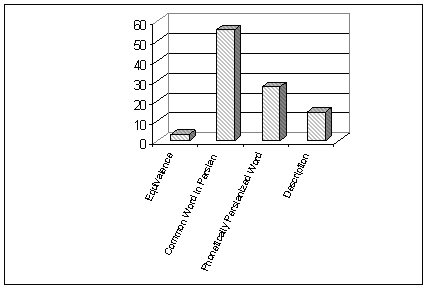
Table 3. The frequency distribution and percentage & chemical terms & expressions related to Ironorm & Fefol leaflets (Number of words: 63).
Figure 1. The frequency distribution and percentage & chemical terms & expressions related to Ironorm & Fefol leaflets (Number of words: 63) 9. The comparison between the translations of drug leaflets done by the researcher and the leaflets of drugs under study In this section, the drug leaflets made in Iran are analyzed to reveal that there would be no exact equivalent for chemical and medical terms in the drug brochures; of course, there should be some kind of explanation or description in parentheses to make these terms and expressions comprehensible for the T readers. These terms are usually phonetically Persianized or are among common terms in Persian as they are actually familiar and recognizable for the T audience. Patients who are suffering from a kind of disease for a long time, e.g., diabetes, have this capability to figure out special terms about their own disease such as 'ketoacidosis'. For patients who are using the drugs of this special ailment for the first time, these terms will not be understandable; hence, it should be essential to place some explanation in parentheses to make the words apprehensible. In the following, some parts of the drug leaflets made in Iran are presented and the chemical and medical terms of them will be underlined to show that there is no special equivalence for them. آنتوم پایین آورنده چربی خون گیاهی آنتوم از بذر و برگ استاندارد شده شبت با نام علمی Anthum graveolens به همراه عصاره استاندارد شده لیمو عمانی (Citrus aurantifolia) ، شاتره ( Fumaria parviflora ) و کاسنی ( cichorium intybus ) ، پس از انجام آزمایش های فارماکوگنوزی ( شاخه ای از فارماکولوژی که در مورد داروهای طبیعی و اجزاء تشکیل دهنده آن ها بحث می کند ) با شیوه های علمی و روش مخصوص به صورت گرانول ( Granules ) و قرص تهیه می گردد . موارد مصرف : 1- هیپرلیپیدامی – هیپرلیپوپروتئین امی ( بالا بودن میزان کلسترول و تری گلیسیریدهای خون ) . 2- پیشگیری و درمان آرتویواسکلروز ( ضخیم شدگی دیواره شریان ها و از بین رفتن خاصیت الاستیک آن ها ) و عوارض ناشی از آن در عروق کرونر قلب ( سکته های مغزی و قلبی ). 3- کولیک های ( قولنج ، درد شکم ) صفراوی . 4- نفخ امعاء ، سکسکه و دردهای دوران قاعدگی . نکات قابل توصیه : به علت احتمال ایجاد فوتودرماتیت ( حالت غیر طبیعی پوست که نور عامل مهم در ایجاد آن است ) به هنگام مصرف این دارو از قرار گرفتن طولانی مدت در معرض تابش نور خورشید و اشعه ماوراء بنفش پرهیز شود . (2) قرص پروپیل تیواوراسیل نحوه صحیح مصرف دارو : - بدون اطلاع پزشک از مصرف هم زمان این دارو با داروهایی نظیر آمینوفیلین ، تتوفیلین ، آمیودارون ، گلیسیرین یده ، ید ، پتاسیم یداید ، ضد انعقادها ، کمارین ، گلوکزیدهای دیژیتالین و سدیم یداید خودداری فرمایید . - در صورت هر نوع ضعف ، صدمه ، عفونت ، و جراحی با پزشک مشورت کنید . - در صورت مصرف دزاژ بالا و یا طولانی مدت دارو ، غده تیروئید و عملکرد آن را تحت نظر داشته باشید . مقدار مصرف دارو : مقدار مصرف هر دارو را پزشک تعیین می کند . مقدار مصرف معمول این دارو به قرار زیر است : جوانان و بزرگسالان برای درمان هیپرتیروئیدیسم ( فعالیت بیش از حد غده تیروئید ) از راه خوراکی : ابتدا mg 900-300 در 1 تا 4 دزمنقسم تا میزان تیروئید به حالت طبیعی باز گردد . توجه : بیماران با هیپرتیروئیدیسم شدید ممکن است تا gr 2/1 در روز نیز مصرف نمایند . برای نگهداری در مان mg 600-50 در 1 تا 4 دزمنقسم بصورت روزانه استفاده می شود . در تیروتوکسیتوز بحرانی ( بیش فعالی غده تیروئید ) mg 400-200 هر 4 ساعت در طی 1 روز اول علاوه بر مقادیر دیگر مصرف شده و سپس بعد از فروکش کردن بحران بیماری ، میزان مصرف دارو به تدریج کاهش می یابد . عوارض جانبی : عوارضی که نیازمند مراقبت پزشکی باشند : الف – عوارض با شیوع فراوان : تب ملایم و گذرا ، لوکوپنی و التهاب یا خارش پوست . ب- عوارض با شیوع کمتر : آگرانولوسیتوز ( کاهش گروهی از گلبول های سفید و ضایعاتی در حلق و سایر غشاء های مخاطی ، دستگاه گوارش و پوست ) ، التهاب یا درد مفاصل ، سندرم شبه لوپوس ( گروهی از بیماری های پوستی که ضایعات آن ها مشخصاً قرمز ، برجسته و زخمی شونده هستند ) و دردهای عصبی محیطی . ج- عوارض نادر : آنمی آپلاستیک ( کم خونی آپلاستیک ) ، هیپوترومبینمی ، نروز کبدی : سرفه و تنفس کوتاه ، تورم غدد لنفاوی و بزاقی . ( نروز : مرگ سلولی ) (3) اریترومایسین هشدار : - در صورت عدم پیشرفت در درمان حتماً با پزشک مشورت کنید . - برای جلوگیری از ایجاد تب روماتیسمی ، دارو حداقل به مدت 10 روز در عفونت های استرپتوکوکی بتاهمولیتیک نوع A مصرف شود . ( همالیتیک : لیز شدن گلبول های قرمز ) به عنوان ضد باکتری : 400 میلی گرم هر 6 ساعت ، یا 800 میلی گرم هر 12 ساعت . عفونت های شدید : 25-15 میلی گرم به ازای هر کیلوگرم وزن هر 6 ساعت . عوارض جانبی : اختلالات دستگاه معدی – روده ای ( بصورت کرامپ یا انقباض عضلات و ناراحتی های معدی و شکمی ) ، اسهال ، تهوع ، استفراغ ، عفونت های زبان و حلق ، لکه های سفید رنگ بر روی دهان و زبان ، خارش واژن . As it has been shown in the texts of leaflets made in Iran, there is no special equivalence for chemical or medical terms of leaflets such as cholesterol(کلسترول) , aminophylline ( آمینوفیلین ), glycerin ( گلیسرین ) , capsule ( کپسول ), suspension ( سوسپانسیون ), anti – acids ( آنتی اسیدها ) , viral ( ویروسی ), non – steroid ( غیر استروئیدی ), allergy ( آلرژی ) , collagen ( کلاژن ) , and other examples underlined in the texts. All these terms are comprehensible for the T audience because they encounter these words in every day speech borrowed from other languages but they are phonetically Persianized in the TL. There are other terms in these texts with some kind of explanation or description in parentheses to become more comprehensible for the T audience; for example, pharmacognosy ( فارماکوگنوزی : شاخه ای از فارماکولوژی که در مورد داروهای طبیعی و اجزاء تشکیل دهنده آن ها بحث می کند) ; hyperlipoproteinemia – hyperlipidemia (هیپرلیپوپروتئین – هیپرلیپیدامی: بالا بودن میزان کلسترول وتری گلیسیرید خون) ; hyperthyroidism ( هیپرتیروئیدیسم : فعالیت بیش از حد غده تیروئید ) ; lupus ( لوپوس : گروهی از بیماریهای پوستی که ان ها مشخصاً قرمز ، برجسته و زخمی شونده هستند ) , and other examples which have been underlined in the texts. The comparison between the translated leaflets done by the researcher and the drug leaflets made in Iran proves that most of the chemical and medical terms are translatable to some extent except for the names of drugs, and special names of the chemical and medical terms as well as the names of some diseases; they can be considered as common words or phonetically Persianized terms in the TL. The important point is that there should be extra information in parentheses for these terms whenever possible to make them acceptable for the T readership. 10. Results of Questionnaires filled by the patients and physicians including the percentage of pros and cons In this section, the results of questionnaires filled by the patients and physicians have been tabulated and shown by the figures. Tables and figures related to the questionnaires filled by the patients are as follows:
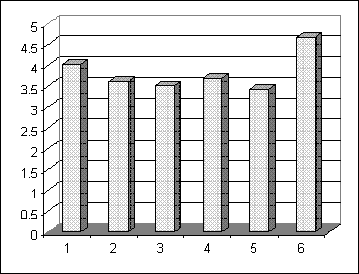
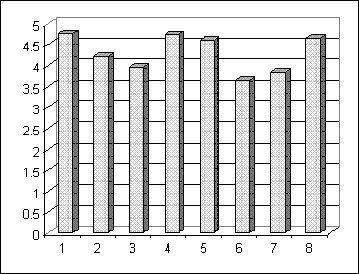
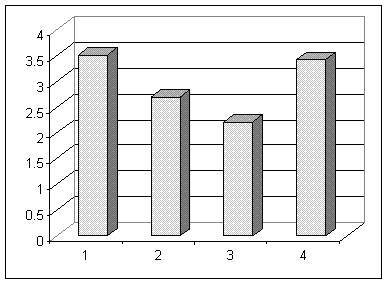
Table (4.4.1a): The frequency distribution and percentage of answers to the patients' reactions to the drug leaflets. Note: Based on the findings, 'The urgency of receiving the brochures to get adequate information about the drugs' has the greatest mean, i.e., 4.6667; and 'Being the brochures in Persian' has the lowest mean, i.e., 3.4286.
Table (4.4.1b): The comparison between the mean of the patients' reactions to the drug leaflets and hypothetical mean table 3 (Q: 1-5 & 8). Note: The observed t from the amount of the critical table is greater than 5 percent (+1.64) at error level; therefore, the patients' reactions to the drug leaflets are above the average level.
Figure (4.4.1): The comparison between the mean of the patients' reactions to the drug leaflets and hypothetical mean table 3 (Q: 1-5 & 8)
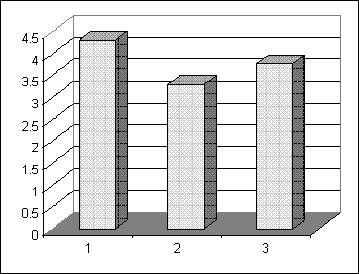
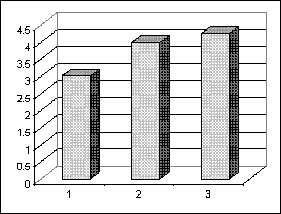
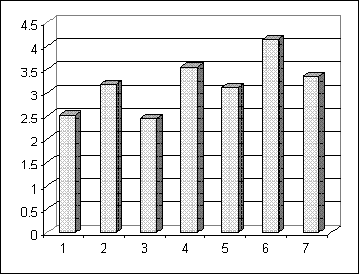
Table (4.4.2a): The frequency distribution and percentage of answers to the effectiveness of drug brochures for patients and giving them necessary information about the drugs. Note: Based on the findings, 'Becoming informed of the side effects of drugs by reading leaflets' has the greatest mean, i.e., 4.2143; and 'Having obtained better information about the usage of the drugs by reading leaflets' has the lowest mean, i.e., 4.1667.
Table (4.4.2b): The comparison between the mean of the effectiveness of the drug brochures for the patients and giving them the necessary information about the drugs and the hypothetical mean table 3 (Q: 6-7). Note: The observed t from the amount of the critical table is greater than 5 percent (+1.64) at error level; therefore, the effectiveness of the drug brochures for the patients and giving them the necessary information about the drugs are above the average level.
Figure (4.4.2): The comparison between the mean of the effectiveness of the drug brochures for the patients and giving them the necessary information about the drugs and the hypothetical mean table 3 (Q: 6-7).
Table (4.4.3a): The frequency distribution
and percentage of answers to the resources of essential
information about drugs.
Table (4.4.3b): The comparison between the mean of the resources of essential information about the drugs and the hypothetical mean table 3 (Q: 9) Note: The observed t from the amount of the critical table is greater than 5 percent (+1.64) at error level; therefore, the resources for gaining the essential information about the drugs are above the average level.
Figure (4.4.3): The comparison between the mean of the resources of essential information about the drugs and the hypothetical mean table 3 (Q: 9).
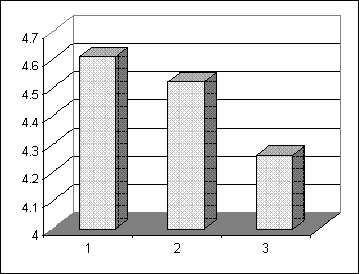
Table (4.4.4a): The frequency distribution and percentage of answers to effectiveness of fluent and comprehensible translations of drug brochures for patients. Note: Based on the findings, 'Receiving adequate instruction about the usage of the drugs' has the greatest mean, i.e., 4.6190; and 'Knowing the points about which the patients should consult their physicians' has the lowest mean, i.e., 4.2619.
Table (4.4.4b): The comparison between the effectiveness of the fluent and comprehensible translations of the drug brochures for the patients and the hypothetical mean table 3 (Q: 10). Note: The observed t from the amount of the critical table is greater than 5 percent (+1.64) at error level; so the effectiveness of the fluent and comprehensible translations of the drug brochures for the patients is above the average level.
Figure (4.4.4): The comparison between the effectiveness of the fluent and comprehensible translations of the drug brochures for the patients and the hypothetical mean table 3 (Q: 10).
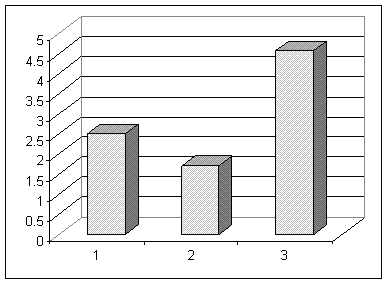
Table (4.4.5a): The frequency distribution and percentage of answers to patients' reactions to translations of drug leaflets. Note: Based on the findings, 'The general effectiveness of Persian drug brochures' has the greatest mean,i.e., 4.5714; and 'The patients' response to fluent Persian translations' has the lowest mean,i.e., 1.7143.
Table (4.4.5b): The comparison between the patients' reactions to the translations of the drug leaflets and the hypothetical mean table 3(Q: 11, 14, and 15). Note: The observed t from the amount of the critical table is less than 5 percent(-1.64) at error level; so the patients' reactions to the translations of the drug leaflets is below the average level.
Figure (4.4.5): The comparison between the patients' reactions to the translations of the drug leaflets and the hypothetical mean table 3(Q: 11, 14, and 15)
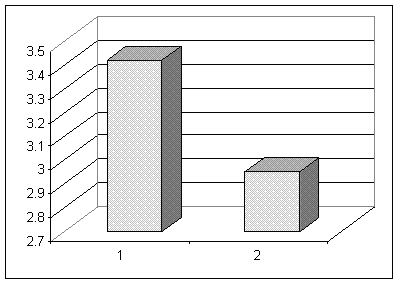
Table (4.4.6a): The frequency distribution and percentage of answers to present condition of leaflets translations. Note: Based on the findings, 'The presence of medical terms & expressions in translated leaflets' has the greatest mean, i.e., 3.4286; and 'The comprehensibility of these terms & expressions' has the lowest mean, i.e., 2.9524.
Table (4.4.6b): The comparison between the present condition of the translations of the leaflets and the hypothetical mean table 3(Q: 12, 13) Note: The observed t from the amount of the critical table is greater than 5 percent (+1.64) at error level; so the present condition of the translations of the leaflets is above the average level.
Figure (4.4.6): The comparison between the present condition of the translations of the leaflets and the hypothetical mean table 3(Q: 12, 13). Tables and figures related to the questionnaires filled by the physicians are as follow:
Table (4.4.7a): The frequency distribution
and percentage of answers to how the physicians present
drug information to patients.
Table (4.4.7b): The comparison between the mean of how the physicians present the drug information to the patients and the hypothetical mean table 3(Q: 1). Note: The observed t from the amount of the critical table is greater than 5 percent (+1.64) at error level; therefore, the physicians' attempt to give the drug information to the patients is above the average level.
Figure (4.4.7): The comparison between the mean of how the physicians present the drug information to the patients and the hypothetical mean table 3(Q: 1).
Table (4.4.8a): The frequency distribution and percentage of answers to the necessity of giving drug information to the patients. Note: Based on the findings, 'Symptoms of allergies to the drugs' has the greatest mean, i.e., 4.2381; and 'Composition of the drugs' has the lowest mean, i.e., 3.000.
Table (4.4.8b): The comparison between the mean of the necessity of giving the drug information to the patients and the hypothetical mean table 3(Q: 2). Note: The observed t from the amount of the critical table is greater than 5 percent (+1.64) at error level; therefore, the necessity of giving the drug information to the patients is above the average level.
Figure (4.4.8): The comparison between the mean of the necessity of giving the drug information to the patients and the hypothetical mean table 3(Q: 2).
Table (4.4.9a): The frequency distribution and percentage of answers to the physicians' knowledge of the drug leaflets. Note: Based on the findings, 'The study of the drug leaflets by the physicians' has the mean which equals to 4.0238.
Table (4.4.9b): The comparison between the mean of the physicians' knowledge of the drug leaflets and the hypothetical mean table 3(Q: 3). Note: The observed t from the amount of the critical table is greater than 5 percent (+1.64) at error level; therefore, the physicians' knowledge of the drug leaflets is above the average level.
Table (4.4.10a): The frequency distribution and percentage of the physicians' answers to the necessity of translating the drug brochures. Note: Based on the findings, 'Physicians' interest in the study of the translations of the drug brochures' has the greatest mean, i.e., 3.5128; and ' Physicians' insistence on the patients' reading the leaflets for further information' has the lowest mean, i.e., 2.2195.
Table (4.4.10b): The comparison between the mean of the necessity of translating the drug brochures and the hypothetical mean table 3(Q: 4-6&8). Note: The observed t from the amount of the critical table is less than 5 percent (- 1.64) at error level; therefore, the necessity of translating the drug brochures is below the average level.
Figure (4.4.10): The comparison between the mean of the necessity of translating the drug brochures and the hypothetical mean table 3(Q: 4-6&8).
Table (4.4.11a): The frequency distribution and percentage of answers to the reason of physicians' recommendation to the patients not to read the drug brochures. Note: Based on the findings, 'Because the side-effects cause anxiety in the patients' has the greatest mean, i.e., 4.1429; and 'Because leaflets are not readable' has the lowest mean, i.e., 2.4500.
Table (4.4.11b): The comparison between the mean of the reason of physicians' recommendation to the patients not to read the drug brochures and the hypothetical mean table 3(Q: 7). Note: The observed t from the amount of the critical table is greater than 5 percent (+1.64) at error level; then, recommendation to the patients not to read the drug brochures is above the average level.
Figure (4.4.11): The comparison between the mean of the reason of physicians' recommendation to the patients not to read the drug brochures and the hypothetical mean table 3(Q: 7). 11. Results of interviews with patients In this part, 35 patients at the age of 20-40 were interviewed and asked some questions about the usage, side-effects, and benefits of the drugs, comprehensibility of the leaflets texts in general, comprehensibility of the medical and chemical terms and expressions, acceptability of the drug names and the chemical compositions for the T audience, the necessity of description for the medical and chemical terms and expressions in parentheses, the readability of the drug leaflets, the fluency of the translations of the leaflets for the drug consumers, and the necessity of the presence of leaflets in the drug packages for T audience. Each patient was given two or three translated brochures done by the researcher and one brochure made in Iran. Each translated brochure was actually read by at least three patients. Most of the patients believed that they could receive enough information about the usage, side effects, and benefits of the drugs by reading the brochures. The medical and chemical terms and expressions are difficult for them to understand, so there would be some explanation or description about these terms and expressions in the parentheses. The drug names and the chemical compositions are not totally comprehensible for them although they are acceptable in the T language since the T audience use them in every day speech like many other terms borrowed from other languages. The drug leaflets are to some extent readable for the drug consumers. he important point is that the translations of the leaflets were sometimes more understandable than the leaflets provided for the T readers in Iran. The patients claimed that the translations were fluent and comprehensible for them. They emphasized that it would be very essential to receive the drug leaflets from the pharmacists; in this case, they can obtain vital information about the drugs and consult their physicians if any problem occurs. In the following, the results of interviews with the patients have been tabulated. The Findings based on interviews:
Table (4.5.1): The frequency distribution and percentage of the pros and cons among the interviewees (patients) about the drug leaflets (N: 35 patients). 12. Conclusion The most important point in translating technical and scientific texts is the terminology. The terms would be transferred in such a way to be understandable or at least acceptable for the T readership. The translated texts can sometimes be more straightforward and comprehensible than the original texts of sciences as it was mentioned by translation theoreticians including Nida (1982), Newmark (1993), Fischbach (1961), and Borja Albi (2000). Since all sciences are interrelated, in this project, an attempt was made to practice and analyze the translations of the medical texts of the drug brochures, and specially the medical and chemical terms and expressions which exist in these brochures. Based on the achievements of this research, most of these terms and expressions are translatable to some extent and equivalence can be found for them. For those terms, which cannot be translated, it would be necessary to explain or describe them in parentheses. The names of the drugs and chemical terms can be phonetically Persianized in the TL to be acceptable for the T audience. Some terms can actually become common words in Persian such as Steroid, Gelatin, Sodium, Polyethylene to name just a few. These terms are acceptable for the target readership like many other words borrowed from other languages such as Radar, Computer, Television, Radio, etc. Most of these terms are just phonetically Persianized to be more clear and fluent in the TL. Based on the results coming from the questionnaire filled by 42 patients at the age of 20-40 and 42 physicians, it is vital to receive the drug brochures from the drug stores. In this case, the patients can become more familiar with the usage, side effects, duration of the usage, interactions with food or with other medicaments and further information; therefore, they can consult their physicians if any problems take place. Based on the outcomes of interviews done with 35 patients, they can obtain enough information about the drugs by reading the leaflets. They claimed that the side effects of the drugs cannot cause much anxiety in them; therefore, they can talk with the physician whenever a difficulty occurs. According to them, sometimes the translated texts are more fluent and understandable than the texts of the leaflets provided for the drugs in Iran. Just the technical terms and expressions, which especially exist in the compositions of the drugs or other technical parts of the leaflets, are difficult for them to understand ; hence, they believe that there should be a kind of explanation or description in parentheses. The results of this section have been statistically elaborated. Most of the patients emphasized that when they refer to a physician for some kind of disease, unfortunately most of the time, the physician does not give them enough information about the drug; therefore, it is essential for them to have the drug brochures to gain extra data about the prescribed medicine. As many of these brochures are not translated and they are delivered to the patients in other languages such as English, German, Spanish, French, etc., the patients asserted that they need to receive the translated texts. Many of the physicians also believed that the translated brochures are helpful and effective for them to save their time and receive enough information about the drugs. Most of the time, they recommend their patients to read the drug brochures to gain further information about the drugs. According to some physicians, it would be effective to translate the drug brochures into fluent Persian for the patients in general. As a result, translating the texts of the drug leaflets is a necessary task, something which is, for some reason, neglected by the pharmaceutical companies. These texts are totally translatable and beneficial for the T audience except for some of the technical terms which can be replaced or accompanied by a description.
Published - September 2008
E-mail this article to your colleague! Need more translation jobs? Click here! Translation agencies are welcome to register here - Free! Freelance translators are welcome to register here - Free! |
|
|
|
||||||||||||||||||||||||||||||||||||||||||||||||||||||||||||||||||||||||||||||||||||||||||||||||||||||||||||||||||||||||||||||||||||||||||||||||||||||||||||||||||||||||||||||||||||||||||||||||||||||||||||||||||||||||||||||||||||||||||||||||||||||||||||||||||||||||||||||||||||||||||||||||||||||||||||||||||||||||||||||||||||||||||||||||||||||||||||||||||||||||||||||||||||||||||||||||||||||||||||||||||||||||||||||||||||||||||||||||||||||||||||||||||||||||||||||||||||||||||||||||||||||||||||||||||||||||||||||||||||||||||||||||||||||||||||||||||||||||||||||||||||||||||||||||||||||||||||||||||||||||||||||||||||||||||||||||||||||||||||||||||||||||||||||||||||||||||||||||||||||||||||||||||||||||||||||||||||||||||||||||||||||||||||||||||||||||||||||||||||||||||||||||||||||||||||||||||||||||||||||||||||||||||||||||||||||||||||||||||||||||||||||||||||||||||||||||||||||||||||||||||||||||||||||||||||||||||||||||||||||||||||||||||||||||||||||||||||||||||
|
|
|
| |||
Legal Disclaimer Site Map |