|
 |
 |
 |
|
|
Home | More Articles | Join as a Member! | Post Your Job - Free! | All Translation Agencies | |
|
|||||||
|
|
|
|
Linux
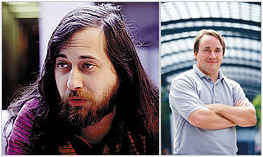
Predominantly known for its use in servers, it is installed on a wide variety of computer hardware, ranging from embedded devices and mobile phones to supercomputers. While the user base of Linux is small, many users are expert and active programmers; the effects of Linux extend well beyond the user base. Software developed on Linux can run with little or no alteration on other Unix machines, e.g. Mac OS X, many websites are hosted on LAMP stacks, and many technologies originating in the Linux domain are eventually ported to Windows. Several corporations are deeply involved, with a vested interest in Linux, and many more give financial and other support: these include Red Hat, Novell, Oracle Corporation, Hewlett-Packard, IBM, Sun Microsystems, Nokia, and Dell. The name "Linux" comes from the Linux kernel, originally written in 1991 by Linus Torvalds. The system's utilities and libraries usually come from the GNU operating system, announced in 1983 by Richard Stallman. The GNU contribution is the basis for the alternative name GNU/Linux. History
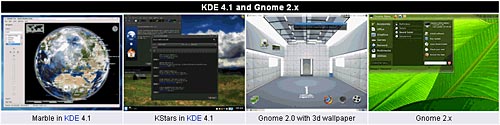
The Unix operating system was conceived and implemented in the 1960s and first released in 1970. Its wide availability and portability meant that it was widely adopted, copied and modified by academic institutions and businesses, with its design being influential on authors of other systems. The GNU Project, started in 1984 by Richard Stallman, had the goal of creating a "complete Unix-compatible software system" made entirely of free software. The next year Stallman created the Free Software Foundation and wrote the GNU General Public License (GNU GPL) in 1989. By the early 1990s, many of the programs required in an operating system (such as libraries, compilers, text editors, a Unix shell, and a windowing system) were completed, although low-level elements such as device drivers, daemons, and the kernel were stalled and incomplete. Linus Torvalds has said that if the GNU kernel had been available at the time (1991), he would not have decided to write his own. MINIX MINIX, a Unix-like system intended for academic use, was released by Andrew S. Tanenbaum in 1987. While source code for the system was available, modification and redistribution were restricted (that is not the case today). In addition, MINIX's 16-bit design was not well adapted to the 32-bit design of the increasingly cheap and popular Intel 386 architecture for personal computers. In 1991, Torvalds began to work on a non-commercial replacement for MINIX while he was attending the University of Helsinki, which would eventually become the Linux kernel. In 1992, Tanenbaum posted an article on Usenet claiming Linux was obsolete. In the article, he criticized the operating system as being monolithic in design and being tied closely to the x86 architecture and thus not portable, as he described "a fundamental error." Tanenbaum suggested that those who wanted a modern operating system should look into one based on the microkernel model. The posting elicited the response of Torvalds, which resulted in a well known debate over the microkernel and monolithic kernel designs. Linux was dependent on the MINIX user space at first. With code from the GNU system freely available, it was advantageous if this could be used with the fledgling OS. Code licensed under the GNU GPL can be used in other projects, so long as they also are released under the same or a compatible license. In order to make the Linux kernel compatible with the components from the GNU Project, Torvalds initiated a switch from his original license (which prohibited commercial redistribution) to the GNU GPL. Linux and GNU developers worked to integrate GNU components with Linux to make a fully functional and free operating system. Commercial and popular uptake Today Linux is used in numerous domains, from embedded systems to supercomputers, and has secured a place in server installations with the popular LAMP application stack. Torvalds continues to direct the development of the kernel. Stallman heads the Free Software Foundation, which in turn supports the GNU components. Finally, individuals and corporations develop third-party non-GNU components. These third-party components comprise a vast body of work and may include both kernel modules and user applications and libraries. Linux vendors and communities combine and distribute the kernel, GNU components, and non-GNU components, with additional package management software in the form of Linux distributions. Design Linux is a modular Unix-like operating system. It derives much of its basic design from principles established in Unix during the 1970s and 1980s. Linux uses a monolithic kernel, the Linux kernel, which handles process control, networking, and peripheral and file system access. Device drivers are integrated directly with the kernel. Much of Linux's higher-level functionality is provided by separate projects which interface with the kernel. The GNU userland is an important part of most Linux systems, providing the shell and Unix tools which carry out many basic operating system tasks. On top these tools form a Linux system with a graphical user interface that can be used, usually running in the X Window System. User interface Linux can be controlled by one or more of a text-based command line interface (CLI), graphical user interface (GUI) (usually the default for desktop), or through controls on the device itself (common on embedded machines). On desktop machines, KDE, GNOME and Xfce are the most popular user interfaces, though a variety of other user interfaces exist. Most popular user interfaces run on top of the X Window System (X), which provides network transparency, enabling a graphical application running on one machine to be displayed and controlled from another. Other GUIs include X window managers such as FVWM, Enlightenment and Window Maker. The window manager provides a means to control the placement and appearance of individual application windows, and interacts with the X window system. A Linux system typically provides a CLI of some sort through a shell, which is the traditional way of interacting with a Unix system. A Linux distribution specialized for servers may use the CLI as its only interface. A “headless system” run without even a monitor can be controlled by the command line via a protocol such as SSH or telnet. Most low-level Linux components, including the GNU Userland, use the CLI exclusively. The CLI is particularly suited for automation of repetitive or delayed tasks, and provides very simple inter-process communication. A graphical terminal emulator program is often used to access the CLI from a Linux desktop. Development The primary difference between Linux and many other popular contemporary operating systems is that the Linux kernel and other components are free and open source software. Linux is not the only such operating system, although it is the best-known and most widely used. Some free and open source software licences are based on the principle of copyleft, a kind of reciprocity: any work derived from a copyleft piece of software must also be copyleft itself. The most common free software license, the GNU GPL, is a form of copyleft, and is used for the Linux kernel and many of the components from the GNU project.
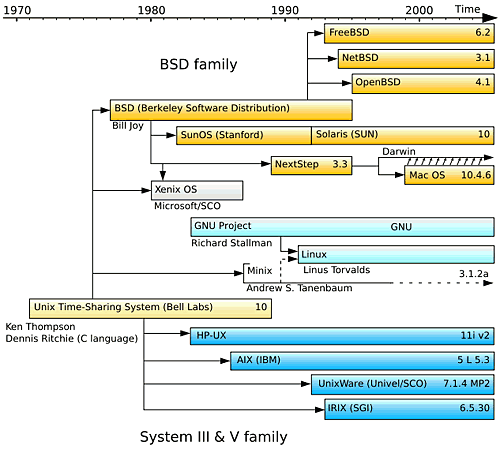
A summarised history of Unix-like operating systems showing Linux's origins. Note that despite similar architectural designs and concepts being shared as part of the POSIX standard, Linux does not share any non-free source code with the original Unix or Minix. As an operating system underdog competing with mainstream operating systems, Linux cannot rely on a monopoly advantage; in order for Linux to be convenient for users, Linux aims for interoperability with other operating systems and established computing standards. Linux systems adhere to POSIX, SUS, ISO and ANSI standards where possible, although to date only one Linux distribution has been POSIX.1 certified, Linux-FT. Free software projects, although developed in a collaborative fashion, are often produced independently of each other. However, given that the software licenses explicitly permit redistribution, this provides a basis for larger scale projects that collect the software produced by stand-alone projects and make it available all at once in the form of a Linux distribution. A Linux distribution, commonly called a “distro”, is a project that manages a remote collection of Linux-based software, and facilitates installation of a Linux operating system. Distributions are maintained by individuals, loose-knit teams, volunteer organizations, and commercial entities. They include system software and application software in the form of packages, and distribution-specific software for initial system installation and configuration as well as later package upgrades and installs. A distribution is responsible for the default configuration of installed Linux systems, system security, and more generally integration of the different software packages into a coherent whole. Community Linux is largely driven by its developer and user communities. Some vendors develop and fund their distributions on a volunteer basis, Debian being a well-known example. Others maintain a community version of their commercial distributions, as Red Hat does with Fedora.
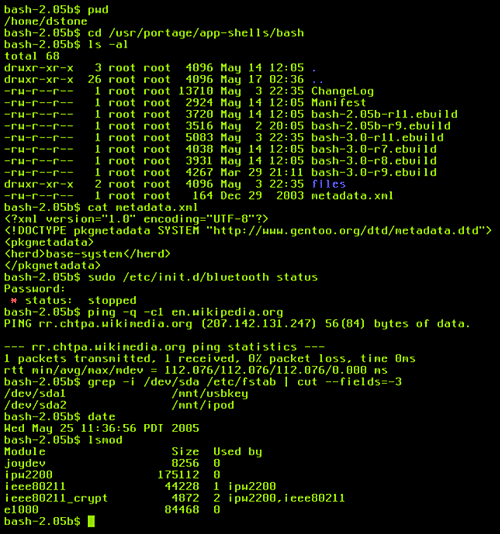
A command line session using bash In many cities and regions, local associations known as Linux Users Groups (LUGs) seek to promote Linux and by extension free software. They hold meetings and provide free demonstrations, training, technical support, and operating system installation to new users. There are also many Internet communities that seek to provide support to Linux users and developers. Most distributions and open source projects have IRC chatrooms or newsgroups. Online forums are another means for support, with notable examples being LinuxQuestions.org and the Gentoo forums. Linux distributions host mailing lists; commonly there will be a specific topic such as usage or development for a given list. There are several technology websites with a Linux focus. Linux Weekly News is a weekly digest of Linux-related news; the Linux Journal is an online magazine of Linux articles published monthly; Slashdot is a technology-related news website with many stories on Linux and open source software; Groklaw has written in depth about Linux-related legal proceedings and there are many articles relevant to the Linux kernel and its relationship with GNU on the GNU project's website. Print magazines on Linux often include cover disks including software or even complete Linux distributions. Although Linux is generally available free of charge, several large corporations have established business models that involve selling, supporting, and contributing to Linux and free software. These include Dell, IBM, HP, Sun Microsystems, Novell, and Red Hat. The free software licenses on which Linux is based explicitly accommodate and encourage commercialization; the relationship between Linux as a whole and individual vendors may be seen as symbiotic. One common business model of commercial suppliers is charging for support, especially for business users. A number of companies also offer a specialized business version of their distribution, which adds proprietary support packages and tools to administer higher numbers of installations or to simplify administrative tasks. Another business model is to give away the software in order to sell hardware. Programming on Linux Most Linux distributions support dozens of programming languages. The most common collection of utilities for building both Linux applications and operating system programs is found within the GNU toolchain, which includes the GNU Compiler Collection (GCC) and the GNU build system. Amongst others, GCC provides compilers for Ada, C, C++, Java, and Fortran. The Linux kernel itself is written to be compiled with GCC. Proprietary compilers for Linux include the Intel C++ Compiler and IBM XL C/C++ Compiler. Most distributions also include support for Perl, Ruby, Python and other dynamic languages. Examples of languages that are less common, but still well-supported, are C# via the Mono project, sponsored by Novell, and Scheme. A number of Java Virtual Machines and development kits run on Linux, including the original Sun Microsystems JVM (HotSpot), and IBM's J2SE RE, as well as many open-source projects like Kaffe. The two main frameworks for developing graphical applications are those of GNOME and KDE. These projects are based on the GTK+ and Qt widget toolkits, respectively, which can also be used independently of the larger framework. Both support a wide variety of languages. There are a number of Integrated development environments available including Anjuta, Code::Blocks, Eclipse, KDevelop, Lazarus, MonoDevelop, NetBeans, and Omnis Studio while the long-established editors Vim and Emacs remain popular. Uses As well as those designed for general purpose use on desktops and servers, distributions may be specialized for different purposes including: computer architecture support, embedded systems, stability, security, localization to a specific region or language, targeting of specific user groups, support for real-time applications, or commitment to a given desktop environment. Furthermore, some distributions deliberately include only free software. Currently, over three hundred distributions are actively developed, with about a dozen distributions being most popular for general-purpose use. Linux is a widely ported operating system. While the Linux kernel was originally designed only for Intel 80386 microprocessors, it now runs on a more diverse range of computer architectures than any other operating system: in the hand-held ARM-based iPAQ and the mainframe IBM System z9, in devices ranging from mobile phones to supercomputers. Specialized distributions exist for less mainstream architectures. The ELKS kernel fork can run on Intel 8086 or Intel 80286 16-bit microprocessors, while the µClinux kernel fork may run on systems without a memory management unit. The kernel also runs on architectures that were only ever intended to use a manufacturer-created operating system, such as Macintosh computers, PDAs, video game consoles, portable music players, and mobile phones. Desktop Although there is a lack of Linux ports for some Mac OS X and Microsoft Windows programs in domains such as desktop publishing and professional audio, applications roughly equivalent to those available for Mac and Windows are available for Linux. Most Linux distributions provide a program for browsing a list of thousands of free software applications that have already been tested and configured for a specific distribution. These free programs can be downloaded and installed with one mouse click and a digital signature guarantees that no one has added a virus or a spyware to these programs. Many free software titles that are popular on Windows, such as Pidgin, Mozilla Firefox, Openoffice.org, and GIMP, are available for Linux. A growing amount of proprietary desktop software is also supported under Linux, see List of proprietary software for Linux. In the field of animation and visual effects, most high end software, such as AutoDesk Maya, Softimage XSI and Apple Shake, is available for Linux, Windows and/or Mac OS X. CrossOver is a proprietary solution based on the open source Wine project that supports running older Windows versions of Microsoft Office and Adobe Photoshop versions through CS2. Microsoft Office 2007 and Adobe Photoshop CS3 are known not to work. Besides the free Windows compatibility layer Wine, most distributions offer Dual boot and X86 virtualization for running both Linux and Windows on the same computer. Linux's open nature allows distributed teams to localize Linux distributions for use in locales where localizing proprietary systems would not be cost-effective. For example the Sinhalese language version of the Knoppix distribution was available for a long time before Microsoft Windows XP was translated to Sinhalese. In this case the Lanka Linux User Group played a major part in developing the localized system by combining the knowledge of university professors, linguists, and local developers. The performance of Linux on the desktop has been a controversial topic, with at least one key Linux kernel developer, Con Kolivas, accusing the Linux community of favouring performance on servers. He quit Linux development because he was frustrated with this lack of focus on the desktop, and then gave a 'tell all' interview on the topic.
Servers and supercomputers
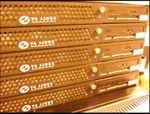
Historically, Linux has mainly been used as a server operating system, and has risen to prominence in that area; Netcraft reported in September 2006 that eight of the ten most reliable internet hosting companies ran Linux on their web servers. (As of June 2008, linux represented five of ten, FreeBSD three of ten, and Microsoft two of ten.) This is due to its relative stability and long uptime, and the fact that desktop software with a graphical user interface for servers is often unneeded. Enterprise and non-enterprise Linux distributions may be found running on servers. Linux is the cornerstone of the LAMP server-software combination (Linux, Apache, MySQL, Perl/PHP/Python) which has achieved popularity among developers, and which is one of the more common platforms for website hosting. Linux is commonly used as an operating system for supercomputers. As of August 2008, out of the top 500 systems, 423 (84.6%) run Linux. Embedded devices
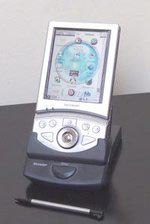
Due to its low cost and ability to be easily modified, an embedded Linux is often used in embedded systems. Linux has become a major competitor to the proprietary Symbian OS found in the majority of smartphones — 16.7% of smartphones sold worldwide during 2006 were using Linux — and it is an alternative to the proprietary Windows CE and Palm OS operating systems on mobile devices. Cell phones or PDAs running on Linux and built on open source platform became a trend from 2007, like Nokia N810, Openmoko's Neo1973 and the on-going Google Android. The popular TiVo digital video recorder uses a customized version of Linux. Several network firewall and router standalone products, including several from Linksys, use Linux internally, using its advanced firewall and routing capabilities. The Korg OASYS and the Yamaha Motif XS music workstations also run Linux. Furthermore, Linux is used in the leading stage lighting control system, FlyingPig/HighEnd WholeHogIII Console. Market share and uptake Many quantitative studies of open source software focus on topics including market share and reliability, with numerous studies specifically examining Linux. The Linux market is growing rapidly, and the revenue of servers, desktops, and packaged software running Linux is expected to exceed $35.7 billion by 2008. IDC's report for Q1 2007 says that Linux now holds 12.7% of the overall server market. This estimate was based on the number of Linux servers sold by various companies. Estimates for the desktop market share of Linux range from less than one percent to almost two percent. In comparison, Microsoft operating systems hold more than 90%. The frictional cost of switching operating systems and lack of support for certain hardware and application programs designed for Microsoft Windows have been two factors that have inhibited adoption. Proponents and analysts attribute the relative success of Linux to its security, reliability, low cost, and freedom from vendor lock-in. Also most recently Google has begun to fund Wine, which acts as a compatibility layer, allowing users to run some Windows programs under Linux. The XO laptop project of One Laptop Per Child is creating a new and potentially much larger Linux community, planned to reach several hundred million schoolchildren and their families and communities in developing countries. Six countries have ordered a million or more units each for delivery in 2007 to distribute to schoolchildren at no charge. Google, Red Hat, and eBay are major supporters of the project. While the XO will also have a Windows option, it will be primarily deployed using RHEL. Copyright and naming The Linux kernel and most GNU software are licensed under the GNU General Public License (GPL). The GPL requires that anyone who distributes the Linux kernel must make the source code (and any modifications) available to the recipient under the same terms. In 1997, Linus Torvalds stated, “Making Linux GPL'd was definitely the best thing I ever did.” Other key components of a Linux system may use other licenses; many libraries use the GNU Lesser General Public License (LGPL), a more permissive variant of the GPL, and the X Window System uses the MIT License. Torvalds has publicly stated that he would not move the Linux kernel (currently licensed under GPL version 2) to version 3 of the GPL, released in mid-2007, specifically citing some provisions in the new license which prohibit the use of the software in digital rights management. A 2001 study of Red Hat Linux 7.1 found that this distribution contained 30 million source lines of code. Using the Constructive Cost Model, the study estimated that this distribution required about eight thousand man-years of development time. According to the study, if all this software had been developed by conventional proprietary means, it would have cost about 1.08 billion dollars (year 2000 U.S. dollars) to develop in the United States. Most of the code (71%) was written in the C programming language, but many other languages were used, including C++, assembly language, Perl, Python, Fortran, and various shell scripting languages. Slightly over half of all lines of code were licensed under the GPL. The Linux kernel itself was 2.4 million lines of code, or 8% of the total. In a later study, the same analysis was performed for Debian GNU/Linux version 4.0. This distribution contained over 283 million source lines of code, and the study estimated that it would have cost 5.4 billion Euros to develop by conventional means. In the United States, the name Linux is a trademark registered to Linus Torvalds. Initially, nobody registered it, but on 15 August 1994, William R. Della Croce, Jr. filed for the trademark Linux, and then demanded royalties from Linux distributors. In 1996, Torvalds and some affected organizations sued him to have the trademark assigned to Torvalds, and in 1997 the case was settled. The licensing of the trademark has since been handled by the Linux Mark Institute. Torvalds has stated that he only trademarked the name to prevent someone else from using it, but was bound in 2005 by United States trademark law to take active measures to enforce the trademark. As a result, the LMI sent out a number of letters to distribution vendors requesting that a fee be paid for the use of the name, and a number of companies have complied. GNU/Linux The Free Software Foundation views Linux distributions which use GNU software as GNU variants and they ask that such operating systems be referred to as GNU/Linux or a Linux-based GNU system. However, the media and population at large refers to this family of operating systems simply as Linux. Some distributions use GNU/Linux (particularly notable is Debian GNU/Linux), but the term's use outside of the enthusiast community is limited. The distinction between the Linux kernel and distributions based on it plus the GNU system is a source of confusion to many newcomers, and the naming remains controversial, as many large Linux distributions (e.g. Ubuntu and SuSE Linux) are simply using the Linux name, rather than GNU/Linux.
Information from Wikipedia
is available under the terms of the GNU Free Documentation
License
E-mail this article to your colleague! Need more translation jobs? Click here! Translation agencies are welcome to register here - Free! Freelance translators are welcome to register here - Free! |
|
|
|
|
|
|
| |||
Legal Disclaimer Site Map |
 Linux
(commonly pronounced IPA: /?l?n?ks/ in English; variants
exist) is a Unix-like computer operating system family which
uses the Linux kernel. Linux is one of the most prominent
examples of free software and open source development; typically
all the underlying source code can be freely modified, used,
and redistributed by anyone.
Linux
(commonly pronounced IPA: /?l?n?ks/ in English; variants
exist) is a Unix-like computer operating system family which
uses the Linux kernel. Linux is one of the most prominent
examples of free software and open source development; typically
all the underlying source code can be freely modified, used,
and redistributed by anyone.