 |
 |
 |
 |
|
|
Home | More Articles | Join as a Member! | Post Your Job - Free! | All Translation Agencies | |
|
|||||||
|
|
|
|
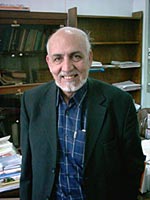
Changing Winds: Product to ProcessBy Ismail Baroudy, Ph.D.,
Tel: + 989163114225
Abstract
Preview There should be some kind of convincing justification for any type of resolution, judgement, adoption, starts and shifts which may at times occur unforeseen in due course for anyone’s individualistic or collective experience. ‘Changing winds and shifting sands’, (Brown, 2000:13) are unavoidable; they take place at least once in every one’s life despite committed tolerance and endearing resistance. Recently, over the past decade ago, a major paradigm shift has been noticeably witnessed in the area of writing. Research and composition theory underwent a profound turnover. The emphasis has constructively got shifted from product to process, (Connor, 1987; Zamel, 1983; Raimes 1991); from composition to composing (Chastain, 1988). There seems to be an urgent need for the motives of this turn over and take over traced, spotted and identified. One veritable speculation claims that it rests deep in the nature of unproductive writing syllabus dominating the practice of the craft of writing. Such a curriculum based on product-modeling standards can be held responsible for creating the calamity of propagating a barren theory of learning, a theory falling short of fulfilling community’s expectations; disabling rather than enabling student-writers. Such a predicament has given rise to an infertile, sterile or pathological type of pedagogy that prefers focusing on preliminary outlining, that provides models to be analytically reviewed and accurately imitated, and that relentlessly stresses teaching writing prescriptively. To every one’s surprise, it has been bitterly discussed that past blind insistence on production of writing samples is quite readily seen as being nothing but blank exercises. They, in fact, prescribe linguistic forms and cram rules of usage, but do nothing of the kind to help student-writers learn to master the skill successfully in question for some purpose (Freedman and Pringle, 1980). Obviously, product or form (finished writing) oriented type of teaching or learning writing is compatible with the authority of a compulsive institution. It dictates thought and behaviour; for in the traditional writing, class composition is taught, for better or worse, as a form of regulated thought and behaviour. Besides, it observes a matter of conformity to established standards for the use of language, as though drifted by ends determining the means. In other words, the preconceived form and purpose of a particular type of a sentence, paragraph or essay determines the organizational strategy and the technical procedure a student-writer should diligently keep track of. It does so to cumulatively lead to the production of a type of writing matching the simulated or transferred particulars of a model chosen to get it faithfully reproduced. Anyhow, there is almost exclusive concern with the qualities of the finished writing, with little or no attention, paid to the writing process or at least an evaluation of the work in progress. Actually, exclusive concern with the qualities of finished writing reinforces ignorance regarding the struggle writers heavily shoulder undergoing the writing process as a private, solitary endeavor. The radical opponents of the traditional teaching methods do maintain that concerns with form and correctness impose unnecessary constraints upon the mechanism of the written expression, especially in the early stages of the writing process. Hence, it can be firmly asserted here that form and correctness are somehow irrelevant if the writer has nothing of the substance he/she requires to proclaim. In other words, no genuine reason, no genuine voice, no genuine audience for writing, and therefore no reason to care whether the writing is clear, orderly and correct are within access to account introspectively for. In classes dominated by model-driven writing mechanism, negative criticism, editorial marginalia, the frustration of dedicated teachers, besides the alienation of students can be readily detected and reluctantly noticed (Donovan and McClelland, 1980). The reasons behind such chaos can be explicitly reviewed with some dissatisfied scholars who have inquisitively embarked on researches to detect unspecified task failure. White (1988) refers such a case to those models ignorantly nominated for exhaustive mimicry. They are found to be "too long and too remote from student (writers’) own writing problems". Moreover, the traditional sequence of activities: ‘Read-Analyze-Write’ involves the questionable assumption that advance diagnosis of writing problems promotes learning. Such detailed analytical work encourages student-writers "to see form as a model into which content is somehow poured resulting mindless copies of a particular organizational plan or style". Flower and Hayes (1977) showed their dissatisfaction with a procedure considering modelling as a problem-solving technique granting themselves justifications in adopting such a stance when asserting that "… we help our students analyze the product, but we leave the process of writing up to inspiration". Eschholz (1980) sees the model-based to be "justifying and inhibiting rather than empowering and liberating". Chastain (1988:252) thinks the classical traditional approach to teaching writing created in students an unproductive and inappropriate orientation about composition due to the reasons stated below:
Pica (1986) blames the models approach to have unwillingly highlighted the fact that student-writers in a second language setting are also language learners, and therefore skills for manipulating grammatical devices that organize paragraphs and combine sentences are not learned at once, through mere imitation of written models. Rather, these skills must be discovered slowly, through the learners’ active testing of hypothesis about how the rules and patterns in the new language function communicate meaning. She thinks that models approach, by insisting on accuracy, denies the learners’ legitimate access to error production as a strategy for testing hypothesis about rules and constructions. In fact, it makes little sense to pinpoint errors on first papers since they undergo substantial changes once they have been responded to (Sommer, 1982). "Furthermore, a premature focus on correctness and usage gives student-writers the impression that language form, rather than how it functions, is what it is that is important and may discourage them from making further serious attempts to communicate" (Zamel, 1983). Thus, students will be deprived of enjoying the chances of developing "capacity for making sense, for negotiating meaning, for finding expression, for undergoing new experience" (Widdowson, 1981:212). In the classroom and through the evaluation of finished writing, the composition, the teacher is then held responsible for impressing forms, standards, and procedures upon the minds and the pens of student-writers. These student-writers presumably possess the privilege of having ideas and information at their disposal, but would otherwise indispensably present this ‘content’ in all sorts of irrational, erroneous and distorted ways. Student-writers, consciously or unconsciously, on abiding by such a procedure in writing, or better still, when conducted as such by teachers’ feedback that is often unhelpful or misleading (Cohen and Roberts, 1976). Such a type of feedback due to its being incomprehensible is superimposed on product that is eventually rendered immature. It is yet to be worked out in vain to hand it over to be corrected and graded by some red-pencilling teachers. The students are regrettably deprived of the true benefit of being honestly led by anyone, through the process of generating ideas, as organizing them into a coherent sequence and eventually putting them on paper. What has been scheduled for instruction in composition has been, in effect, evaluation of raw products (Donovan and McClelland, 1980). Ironically, in product-based approach to writing, attention is intensively focused on nothing but blaming and praising the novice writers. At the foundation of such an Orthodox method, among all its possible varieties, unanimously infer an almost exclusive concern with writing as a finished product, with the varieties of form, logic and purpose - along with standards of correctness - that these finished products should represent. The finished product should be clear, concise, orderly, and correct; stated with maximum commitment to and in strict accordance with rules and standards of good English. Inevitably, on the basis of a set of formal expectations, the teacher evaluates and corrects a written product when it is announced to have been finished. Student-writers, of course, should gradually master the forms, standards and procedures that govern the rational uses of language and make the "content" of writing presentable, functioning similar to the product of a mature educated mind. There have been a lot of intensive research studies - the findings of which invalidate the presentation of models in the composition classrooms because it has fallen short of producing desirable results - the skills of writing. On the other hand, scholars have rarely investigated its merits and privileges in developing student-writers’ writing capabilities. It can be hardly denied that mere exposure to models, though superior in quality, replicates masterly copied duplicates to ever foster the perfunctory writer (Graves, 1975:236). They rarely succeed in instilling vitality into the frozen, limpid skill of writing, unleashing some type of competitive products that notably surpasses others, if compared, heads and shoulders. Realistically model-based approach is thus not vigorous enough to make wonders and work miracles. This is quite true if processed detached from other untapped, non-harnessed, productive potentialities human beings are virtually predisposed to have them inherently in full access. Unfortunately, a time commences when a mindless common adversity unjustifiably creeps to take an aggressive position against a tradition of experience to ignorantly render it barely fruitless and harmful. In late 70s and early 80s modeling or prose modeling, to use the term in its traditional sense, imitating the superior models (Stolarek, 1994:154) was bitterly criticized for the frustration it brings about due to deflecting and sophisticating student-writers’ writing behaviours. The unpronounced lengthy era during which the so-called model approach dictated upon the untrained teachers who were recklessly busy in their unchallenged classes training their unmotivated students, not to attend some scholastic research to meditatively germinate new findings. In fact, they were terribly in need of such accomplishments so as to elaborate on their mini-approach, non-reconciled, scientific or non-scientific underlying rationale. Unexpectedly, the technique was dogmatically and uncritically followed without having its validity and reliability empirically examined, got as well transferred through oral or visual medium to the long hopelessly awaiting curious contemporary generation. To every one’s surprise, recently due to a paradigm shift, an exodus to process writing, to a promised land though defined to be a mere fad (Zemelman and Daniels, 1988) readily all of a sudden has broken out. Supported by a plethora of vogue research devices the newly emerged process theory of writing won fightless popularity in the absence of its cognate’s least or mild resistance. Posterior to such a radical point of departure, the professionals in charge showed up with a fuzzy reaction not backed by the hard-boiled, tough model-sympathetic expertise. As a matter of fact, they would have irresistibly given up to whatever kind of a change had to happen quite right then. References Atwell, N. (1987) In the Middle Writing, Reading and Learning with Adolescents. Upper Motelair, NJ: Boynton/ Cook. Brown, D. (2000) Principles of Language Learning and Teaching. New Jersey: Prentice-Hall. Chastain, K. (1988). Developing Second Language Skills: Theory and Practice. San Diego: Harcourt Brace Jovanovich. Cohen, A. D. and Robbins, M. (1976). Toward Assessing Inter- language Performance: The Relationship between Selected Errors, Learner Characteristics and Learners’ Explanations. Language Learning, 26:45-61. Connor, U. (1987). Research Frontiers in Writing Analysis. TESOL Quarterly, 21:677-715. Donovan, T. R. and McClelland, B. W. (1980). Eight Approaches to Teaching Composition Urbana, ill: National Council of Teachers of English. Eschholz, P. A. (1980). The Prose Models Approach Using Products in the Process. In T. R. Donovan and W. McClelland (Eds). Eight Approaches to Teaching Composition. Urbana ill: National Council of Teachers of English. Flower, L. and Hayes J. R. (1977). Problem-solving Strategies and the Writing Process. College English, 39:449-464. Freedman, A. and Pringle I. (1980) Reinventing the Rhetorical Tradition. Conway, Arkansas: L& S Books. Graves, D. H. (1975). An Examination of the Writing Processes of Seven Year Old Children. Research in the Teaching of English, 9:227-241. Pica, T. (1986). An Interactional Approach to the Teaching of Writing. English Teaching Forum, 24:6-10. Raimes, A. (1991). Out of the Wood: Emerging Traditions in the Teaching of Writing. TESOL Quarterly, 25:407-430. Sommer, N. (1982). Responding to Student Writing. College Composition and Communication, 33:148-165. Stolarek, A. E. (1994). Prose Modeling and Metacognition: The Effect of Modeling on Development of a Metacognition Stance towards Writing. Research in the Teaching of English, 28:154-173. White, R. V. (1988). Process and Product. In P. Robinson (Ed) Academic Writing. ELT Document, 129:4-16. Widdowson, H. G. (1981). The Use of Literature. In W. Ross (Ed), On TESOL: The Contemporary Writer. New York: Harcourt Brace Jovanovich. Zamel, V. (1983). The Composing Processes of Advanced ESL Students: Six Case Studies. TESOL Quarterly, 17:165-168. Zemelman, S. and Daniel, H. (1988). A Community of Writers: Teaching Writing in the Junior and Senior High School. Heinemann: Portsmouth, NH.
E-mail this article to your colleague! Need more translation jobs? Click here! Translation agencies are welcome to register here - Free! Freelance translators are welcome to register here - Free! |
|
|
|
|
|
|
| |||
Legal Disclaimer Site Map |
 Almost
all the writing classrooms whether of L1 or L2 category
are reported to have been seriously frustrated and deflected
with almost absolute failure mainly stemming from exclusively
attending to product specifications. The classrooms,
having been engaged in product writing, their student-writers
are seen to have been commonly trained to spend, in vain,
their time and energy, radically caring about the structural
patterns and formal aspects of language at the expense of
meaning. They are, in fact, misdirected to spoil their best
efforts, emulating typical models to honestly reproduce
them. By contrast, due to the fact that teachers have not
been comprehensively familiarized with a historic event
occurred in the writing trend, the following study accordingly
describes a paradigm shift in the writing pedagogy. Besides,
it provides a technical survey into how student-writers
experience writing mainly as a meaning-making event. Process
student-writers, on having been allowed to choose topics
at their own will and use their time freely, will concurrently
think and compose; create and revise in the context of writing;
thus, letting the unexpected meaning to be recreated by
a real audience for a real purpose. This study, in sum,
aims at informing details and promoting awareness about
the conductive specificities of such an approach. In this
way, on having the attentions shifted from product to process,
writing teachers are accordingly expected to eventually
establish a dynamic environment in which competent student-writers
readily emerge into practical existence.
Almost
all the writing classrooms whether of L1 or L2 category
are reported to have been seriously frustrated and deflected
with almost absolute failure mainly stemming from exclusively
attending to product specifications. The classrooms,
having been engaged in product writing, their student-writers
are seen to have been commonly trained to spend, in vain,
their time and energy, radically caring about the structural
patterns and formal aspects of language at the expense of
meaning. They are, in fact, misdirected to spoil their best
efforts, emulating typical models to honestly reproduce
them. By contrast, due to the fact that teachers have not
been comprehensively familiarized with a historic event
occurred in the writing trend, the following study accordingly
describes a paradigm shift in the writing pedagogy. Besides,
it provides a technical survey into how student-writers
experience writing mainly as a meaning-making event. Process
student-writers, on having been allowed to choose topics
at their own will and use their time freely, will concurrently
think and compose; create and revise in the context of writing;
thus, letting the unexpected meaning to be recreated by
a real audience for a real purpose. This study, in sum,
aims at informing details and promoting awareness about
the conductive specificities of such an approach. In this
way, on having the attentions shifted from product to process,
writing teachers are accordingly expected to eventually
establish a dynamic environment in which competent student-writers
readily emerge into practical existence.

