 |
 |
 |
 |
|
|
Home | More Articles | Join as a Member! | Post Your Job - Free! | All Translation Agencies | |
|
|||||||
|
|
|
|
How to Do Business in Poland
Overview
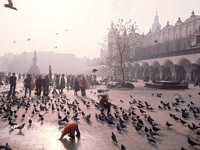
The following years have seen significant economic, social and political reform culminating in Poland joining NATO in 1999 and the European Union in 2004. A unique history and geography has shaped the customs and distinctive personality of the Polish people. Today, Poland emerges as a culturally rich and proud nation where the contemporary meets the traditional. Working practices in Poland Generally speaking, official working hours are from 8am to 4 pm, Monday to Friday with no official break for lunch. However, it is not uncommon for business lunches to take place around 4pm in Poland and continue well into the evening. It is good business practice to arrive on time for business meetings in Poland. Although meetings often have no specific end time and can go on longer than planned, punctuality is vital for establishing your reliability. When making a business appointment, you are advised to make it four to five days in advance and confirm the meeting the day before. Your Polish colleagues can be flexible and are often prepared to change schedules if necessary Structure and hierarchy in Polish companies
Working relationships in Poland
Business practices in Poland
Polish business etiquette (Do’s and Don’ts)
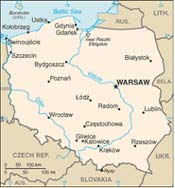
Travel to and in Poland You can travel to and within Poland by air, land, or sea. Most travelers arrive by air, and then take advantage of the numerous possibilities to see the country by land. If you fly into Poland, you will land either at Okecie Airport in Warsaw, Balice Airport in Krakow or Rebiechowo Airport in Gdansk. Warsaw’s Okecie International Airport stands testament to Poland’s renewed economy: it claims to be the most modern and safe airport in Central Europe and offers all sorts of useful services (car rental, travel agencies, a post office, a bank, restaurants, and shops). The other minor airports in Poland are: Poznan, Wroclaw, Szczecin, and Katowice. LOT Polish Airlines runs connecting flights between Warsaw and other major cities, but relatively few between those cities. Call ahead to confirm your flight schedule. Poland is covered by a dense network of rail and coach services which provide easy access to almost any place you can find on the map. To find out more about train schedules, look at the Polish State Railway interactive timetable: www.rozklad.com City transport Buses, trams, trolleybuses, and the underground (only in Warsaw) make up the public transport system in Poland. Buses run on ordinary, fast and night lines. Tickets may be purchased at news-stands, some shops, sometimes from bus-drivers; they should be validated immediately upon boarding. Fare rates are different in different cities and tickets purchased in one city cannot be used in another. Various tickets are in use: one-fare day or night tickets, one-day, one-hour, or one-week passes, one-fare city or weekend group passes. Each piece of bulky luggage or a dog needs an additional ticket, the equivalent of a normal passenger fare. Steep on the spot fines are given fines for traveling or transporting bulky luggage without valid tickets. Weather Poland has a temperate changeable climate. In winter the temperatures vary from the mid 30’s to the low 60’s °F (-1 to -15°C). Spring starts in March with temperatures varying from 5 to 20°C, until about May or June. July is the hottest month, but the rest of the summer is also quite warm with temperatures ranging from the mid 70’s into the low 90’s °F (21 to 32 °C). Initially warm and balmy, September marks the beginning of Poland’s autumn. Thereafter, the days become more damp and foggy until December, when winter arrives and the temperature drops to a few degrees below zero. Characterized by abundant snowfall but with plenty of sunshine, Poland’s winter season caters for winter sports of all types. To check current weather conditions for Poland, click weather.yahoo.com Money Poland is not a member of the Euro currency system. The Polish currency is Zloty = 100 Groszy. To find out current exchange rates, please click www.xe.com. Major foreign currencies may be exchanged for Polish Zlotys at the airport, banks, larger hotels and border crossings in unlimited amounts. Throughout the entire country there are also numerous private currency exchange offices identified by the name KANTOR. Banks in larger cities are usually open from 9am to 4pm on weekdays and until 1pm on Saturdays. Banks in smaller towns or villages have more limited business hours. KANTORs are usually open from 9am to 7pm weekdays and until 2pm on Saturdays. 24-hour services are usually available in larger major tourist centers such as train stations, border crossings and airports. Electricity 220 volts, 50 Hz AC Euro socket style Weights & measures Metric Tipping It is customary to leave a tip of 10 to 15% in restaurants and cafes. Tipping in self-service restaurants is not expected. Tips for porter’s services in hotels and train stations are customary, but amounts for services rendered are at the traveler’s discretion. Time Poland runs on GMT plus 1 hour. So, you lose time if you fly from the west: 1 hour if departing from London. You gain time if you fly from the east: 7 hours if from Hong Kong, 3 if from Moscow, and 2 if from Israel. Poland usually counts time on a 24 hour clock, and the week starts on Monday. Sources used http://www.meetpoland.com/facts-about-poland.html http://www.communicaid.com/poland-business-culture.asp
E-mail this article to your colleague! Need more translation jobs? Click here! Translation agencies are welcome to register here - Free! Freelance translators are welcome to register here - Free! |
|
|
|
|
|
|
| |||
Legal Disclaimer Site Map |
 Established as an independent nation in the
middle of the 10th century, Poland reached its political
and military zenith in the 16th before internal fighting
combined with external influence provoked its partition.
Poland briefly regained its independence in 1918 only to
see it lost again following the invasion by German and Soviet
troops in 1939. The end of the war saw Poland become a Soviet
satellite state which lasted until the democratic party
“Solidarity” (Solidarność), led by
Lech Walesa, swept to power in 1990.
Established as an independent nation in the
middle of the 10th century, Poland reached its political
and military zenith in the 16th before internal fighting
combined with external influence provoked its partition.
Poland briefly regained its independence in 1918 only to
see it lost again following the invasion by German and Soviet
troops in 1939. The end of the war saw Poland become a Soviet
satellite state which lasted until the democratic party
“Solidarity” (Solidarność), led by
Lech Walesa, swept to power in 1990. 

