 |
 |
 |
 |
|
|
Home | More Articles | Join as a Member! | Post Your Job - Free! | All Translation Agencies | |
|
|||||||
|
|
|
|
Leadership Lessons From Pope John Paul II
From a small-town Polish boy born to a retired army officer to become Pope; from a hard life in Nazi occupied Poland, his mother dead of kidney and heart failure, an older brother dead from scarlet fever, to become quite possibly “man of the century.” How did such an unlikely candidate for the head of the Roman Catholic Church rise so quickly to such prominence? What leadership lessons can we learn from this global spiritual leader who so moved the world? Here is a brief timeline snap-shot of Karol Josef Wojtyla’s exemplary leadership: Knowledge 1958: Pope Pius XII names Wojtyla auxiliary bishop of Krakow. By this time, Wojtyla was a professor of ethics and had two doctorate degrees; he had studied theology in clandestine during the oppressive Nazi occupation of Poland. Leadership lesson: leaders are readers. Specialized knowledge is key to leadership along with general studies. While Wojtyla had two doctorates in his field, he also studied philosophy and literature and was also a playwright and a poet. If you were to take an hour-a-day reading up in your field and applying the knowledge, within a period of five years you would become an ‘expert’ within your field. People are hungering and thirsting for a leader with knowledge and experience. In Wojtyla’s case, he took the time to gain knowledge of the world, himself, and beyond. As a chaplain for university students in Krakow, he used to go on frequent camping and kayaking trips and offered counseling and mentorship to the students. On these excursions, he would usually take an hour or more to be alone by himself to reflect, read, and pray. These moments of solitude gave him a strong internal compass and knowledge of self required of all great leaders. Humility 1978: Elected Pope John Paul II becoming the 264th pope and first non-Italian pope in 456 years; refuses formal papal coronation in favor of a simple inauguration ceremony and chooses not to use the royal plural “We” referring to himself plainly as “I”. Wojtyla was not impressed by the trappings of power and its symbols and made that clear from the day he was elected Pope. He had a very simple, plain, and honest way of communicating that endeared people to him. He exemplified the servant-leader role by embodying one of the titles of the Pope: Servus Servorum Dei (Servant of the Servants of God). Leadership lesson: leaders are humble. We can learn from Wojtyla’s example by not isolating ourselves in the corner office or ivory tower with each successive promotion, hiding behind closed doors and a sea of fancy titles, diplomas, awards, certificates, and press-clippings. Like Wojtyla, we can make ourselves available to our people with open doors, seeking to understand and encouraging dialogue. Leadership by walking around and talking to people and listening to their needs earns respect and trust. Heart 1979: Visits his homeland, Poland, for the first time as Pope and speaks to his people, inspiring Solidarity, the first independent labor movement in the Soviet bloc. Risking his life against the totalitarian Communist Regime in Poland, Wojtyla returned to his homeland and did not speak in the typical, official ‘visiting dignitary’ tone. He spoke from his heart, from the gut, soul-to-soul – in their language. The people of Poland saw themselves reflected in him; he encouraged them to not crawl like animals but walk tall and ‘be not afraid.’ The crowd went wild and a flame of rebellion and counter-revolution was lit in the collective consciousness of the Polish people, sparking the Solidarity movement for independence and freedom that eventually toppled the Communist Regime. Leadership lesson: leaders have heart. Intellect is not enough; both head and heart have to be married. If you want to win over people, risk letting down your guard and speak from the heart. The leader that speaks from the heart almost always wins over reason alone. Forgiveness 1983: Meets with assassin Ali Agca in prison. Just two years after the assassination attempt on his life by gunman, Mehmet Ali Agca, and several months of painful recovery, the Pope visited Agca in prison and offered forgiveness. (Much later, in 2000, the Italian government granted clemency to Agca, on the Pope’s request). Leadership lesson: leaders are willing to forgive. We are all fallible human beings that make mistakes. The mark of a true leader is his or her willingness to forgive. It’s also a smart leadership strategy in the long-term. While there’s no excuse to keep someone who consistently fails to learn from their mistakes, the boss that fires an employee for making a big mistake is often mistaken for doing so. After all, there’s always the risk that the next person hired could potentially make the same disastrous mistake. But by offering forgiveness to the person that errs, that person is unlikely to repeat that same mistake, and will most likely remain fiercely loyal to you. Responsibility 2000: Offers a day of apology for sins committed by members of the Catholic Church over the centuries; visits Israel and pays homage to the victims of the Holocaust. Wojtyla was the first pope to visit the Auschwitz concentration camp in Poland in 1979, and later in 2000, he visited Jerusalem’s Yad Vashem in remembrance of the six million Jews who died in the Holocaust, praying for reconciliation between Christians and Jews and apologizing for the sin of anti-Semitism by Christians. The day that former U.S. President, John F. Kennedy, took full responsibility for the Bay of Pigs fiasco, was the day he became a leader. The day that Wojtyla apologized and took responsibility for the sins of anti-Semitism committed by Christians, was the day he became a truly respected global leader. Leadership lesson: leaders take full responsibility for their organization. Blaming and complaining is the mark of a loser. We can make excuses or we can make progress – but we certainly can’t do both. To be a leader, you must take full responsibility for your actions, your team, and ultimately the whole organization or cause you lead. Uncommon Leadership 1982 – 2003: Receives PLO leader Arafat; Meets Gorbachev as first pope to meet with a Kremlin Chief; visits Cuba and meets with Castro; becomes first pope in history to enter a mosque. Despite criticism from many corners on the controversial issues he supported, Wojtyla was not one to ever back down. He stood for what he believed in and had the courage of convictions. As a leader, he was tough but flexible. His flexibility allowed him to meet famous, and infamous, world leaders and address difficult issues that made him unpopular in certain circles. But he also had the inner toughness and steely resolve to break down walls and foster reconciliation. As Pope and head of the Roman Catholic Church he knew his role was to unify the Church while serving as an apostle of justice and peace. He stood his ground and never wavered, even if it meant alienation. Leadership lesson: leaders stand for what they believe in. Leadership is not about winning a popularity contest. Stand up for what you believe in. Be strong and be firm. A divided mind is weak; a united mind, clear and singular in purpose, is powerful beyond measure. Legacy: Rebel with a Cause 1920 – 2005: A legacy of leadership. Pope John Paul II was a rebel with a cause. A champion of human worth and dignity, a freedom fighter, a torch bearer for social justice, he left a lasting legacy of leadership and moral example that the world can follow. Asked once, if he feared retaliation from government officials, he replied (according to biographer George Weigel), “I’m not afraid of them. They are afraid of me.” Indeed, he relayed a message to the world that will echo through eternity: “Be not afraid!”
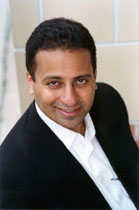
Sharif Khan (http://www.herosoul.com; sharif@herosoul.com) is a freelance writer, motivational speaker, coach, and author of "Psychology of the Hero Soul," an inspirational book on awakening the hero within and developing people’s leadership potential. Call 416-417-1259 to learn about Sharif's business writing, copywriting, and speaking services.
Testimonial Thank you for the great article "Leadership
Lessons From Pope John Paul II"!
E-mail this article to your colleague! Need more translation jobs? Click here! Translation agencies are welcome to register here - Free! Freelance translators are welcome to register here - Free! |
|
|
|
|
|
|
| |||
Legal Disclaimer Site Map |
 "Heroes
are rebels with a cause. Rebels because they challenge
the traditional ways of thinking and refuse to follow
the herd. They have a cause, a vision, that's larger
than life." - Sharif Khan, author of Psychology
of the Hero Soul
"Heroes
are rebels with a cause. Rebels because they challenge
the traditional ways of thinking and refuse to follow
the herd. They have a cause, a vision, that's larger
than life." - Sharif Khan, author of Psychology
of the Hero Soul

